
Entry
Entries A-Z
Subject index
Women's Cancers
THE MOST FREQUENT types of cancers among women arise in the breast, lung, stomach, colon, and cervix. Women's cancers are those malignancies that arise in organs found inside the female body. They involve cancers of the breast and reproductive tract. Early recognition of breast and gynecological cancers is vital for treatment and increase the prognosis for survival. To identify the most appropriate treatment methods for these cancers, their etiologies, risk factors, and symptoms must be understood.
Breast Cancer
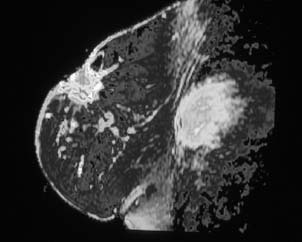
Breast cancer is a malignancy that arises from abnormal mutated cells of the breast. It is the most prevalent cancer among women, affecting approximately one million women worldwide. This malignancy is largely driven by female reproductive hormones and risk is modified by reproductive events. Early menarche (before the age of 12 years) and late menopause (after the age of 55 years) increases the risk. The risk also increases with a later age of first pregnancy. Other factors include obesity and the use of hormone replacement therapy. Breast cancer may have familial roots; it may be caused by mutations in genes such as BRCA1 and BRCA2 that are inherited in an autosomal dominant pattern. BRCA1 and BRCA2 are the two major genes related to hereditary breast cancer. Other genetic aberrations increasing the risk include mutations of the ataxia telangiectasia mutated (ATM) gene that control the rate at which cells grow and divide; checkpoint homolog (CHEK2), a tumor-suppressor gene; and the RAD51 gene (a protein essential for repair of damaged DNA). Somatic mutations acquired during ones lifetime also may be a cause, including the erythroblastic leukemia viral oncogene homolog 2 (ERBB2) gene, which provides instructions for producing growth factor receptors.
The most common symptom of breast cancer is a hard, solid mass. It is often identified during mammogram tests. There are a number of treatments for breast cancer, depending on the type of tumor and presence of metastases. To remove the lump or tumor, a lumpectomy is often used. If the tumor affects the whole breast or has metastasized to other parts of the body such as lymph nodes a mastectomy is used. Radiation therapy is also used to kill the cancer cells and reduce the size of the tumor.
Cervical Cancer
Cervical cancer is a cancer of the cervix located in the neck of the uterus. The cancer arises from the squamous cells or the columnar cells of the cervix. Cervical cancer is the second most common type of cancer in women and is the most common gynecological malignancy. It has a mortality rate of almost 290,000 women each year worldwide. This malignancy is most often seen in developing countries and in areas where level of education is low.
The most common etiology of cervical cancer is the human papilloma virus, which may be contracted through unprotected sexual intercourse, having multiple sexual partners, and beginning sexual activity at an early age. It is also seen in those who use immunosuppressant drugs and in children of women exposed to the drug diethylstilbestrol during pregnancy.
Screening: Early recognition of breast and gynecological cancers is vital for treatment and increase the prognosis for survival.
...
- Loading...
Get a 30 day FREE TRIAL
-
 Watch videos from a variety of sources bringing classroom topics to life
 -
Read modern, diverse business cases
-
Explore hundreds of books and reference titles

Read next

More like this
Sage Recommends
We found other relevant content for you on other Sage platforms.
Have you created a personal profile? Login or create a profile so that you can save clips, playlists and searches