
Entry
Entries A-Z
Subject index
Venezuela
THE LARGE SOUTH American country of Venezuela was a Spanish colony until it gained its independence in 1811, when it became a part of Gran Colombia. Twenty years later, it became the Republic of Venezuela and was internationally recognized in 1845. In 1999, it became the Bolivarian Republic of Venezuela. It had a population of 26,749,000 in 2006, with 263 doctors and 64 nurses per 100,000 people. An example of cancer incidence rates in Venezuela includes 159 cases of cancer in males per 100,000, according to the International Agency for Research on Cancer. Before 1900, healthcare in Venezuela was extremely limited, with poorer people relying on herbal cures and those in cities or towns, who had access to doctors, using surgery to remove tumors. The situation gradually improved during the 20th century, and in the 1960s, the wealth generated by oil—petroleum now makes up 80 percent of Venezuela's exports—re-sulted in there being far more money spent on health services throughout the country.
During the 1960s, Aquiles Erminy, Alejandro Urdaneta, and Alfonso Arenas from the División de Oncología and Instituto de Oncología and Luís Razetti, Ministerio de Sanidad y Asistencia Social, in Caracas, were involved in research on the detection and prevention of cervical uterine cancer in the Venezuelan capital, showing positive results after a 30month campaign that raised the level of prevention and also improved rates of detection and diagnosis. Dr. E. Grossman from the División de Oncología also worked on uterine cancer detection programs but concentrated on the results in rural areas.
Probably the most famous Venezuelan who has worked on cancer treatment is Baruj Benacerraf (1920–). Born in Caracas, he later moved to the United States, where he worked as a pathologist and immunologist. In 1970, he was appointed professor of comparative pathology and chairman of the pathology department at Harvard University Medical School; 10 years later, he was made president of the Sidney Farber Cancer Institute (now the Dana-Farber Cancer Institute) in Boston. In 1980, he shared, with George Snell and Jean Dausset, the Nobel Prize for Physiology or Medicine for their discovery of genes that regulate the immune responses and of the role that some of these genes play in autoimmune diseases.
The various types of cancer found in Venezuela include most of those associated with both First World and Third World countries. Lung cancer and liver cancer remain a major problem with Venezuelan men because of their high levels of smoking and consumption of alcohol. Similarly, breast cancer and cervical cancer are common cancer complaints for the nation's women. For gastric cancer, there is a strong inverse association between prevalence and social class, and there is also a high prevalence of human T cell leukemia-lymphoma virus in some black former slave communities.
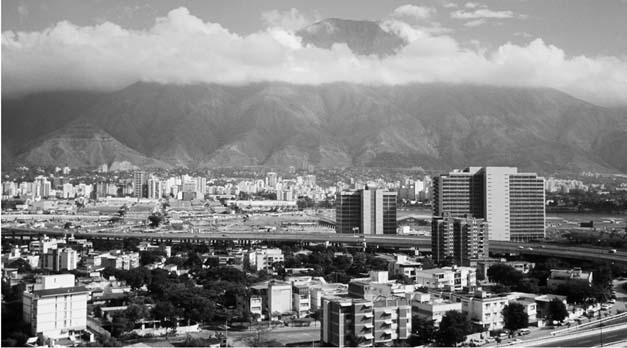
The city of Caracas, Venezuela: The various types of cancer found in Venezuela include most of those associated with both First World and Third World countries. Lung cancer cancer remains a major problem with Venezuelan men because of their high levels of smoking.
Prominent Venezuelans who have died from cancer include Miguel Ángel Burelli Rivas (1922–2003), foreign minister of Venezuela from 1994 to 1998, who died in Washington, D.C., of lung cancer; writer and politician Juan Oropeza Riera (1906–71), who succumbed to cancer in Caracas; and Raúl Vale (1944–2003), who died in Texas from complications connected with lung cancer. Mention should also be made of Raymond Dalmau (1950–), who coached the Venezuelan basketball team in the late 1980s and was diagnosed with colon cancer in 2000, and baseball player Tomás Orlando Pérez (1973–), who was born in Venezuela and has helped raise money for the Breast Cancer Foundation.
...
- Loading...
Get a 30 day FREE TRIAL
-
 Watch videos from a variety of sources bringing classroom topics to life
 -
Read modern, diverse business cases
-
Explore hundreds of books and reference titles

Read next

More like this
Sage Recommends
We found other relevant content for you on other Sage platforms.
Have you created a personal profile? Login or create a profile so that you can save clips, playlists and searches