
Entry
Entries A-Z
Subject index
Singapore
SINGAPORE IS AN island republic located in southeast Asia with a population of 4,353,000 in 2004. It has one of the best healthcare systems in the world, with a ratio of 163 doctors to 100,000 people. An example of cancer incidence rates in Singapore includes 225 cases of cancer in males per 100,000, according to the International Agency for Research on Cancer.
Because of the small size of the island, its prosperity, and its highly efficient record-keeping, cancer cases, similar to other medical statistics in Singapore, are well noted and accurately listed. Cancer in Singapore is the major cause of death, accounting for some 26 percent of all deaths in 2003, with 54,510 cases diagnosed in the period from 1998 to 2003. Although cancer has affected people of all ages, 38 percent of cases relate to people between the ages of 35 and 64 years.
The most common causes of cancer in men are lung cancer, followed by that in the colon or rectum, and then liver cancer. For women, breast cancer is the most common, followed by colon or rectum cancer, and then lung cancer. Lung cancer has long been an important health worry in Singapore, as for many years smoking was common among men. For historical data, it is important to remember that some other types of cancers were not initially diagnosed as such.
Historically, many sufferers went to seek treatment at the Singapore General Hospital, which was founded in 1821 and remains one of the major healthcare providers in the country. It has occupied several locations in Singapore, with the current hospital being built in 1981 and reorganized considerably in 1989 and again in 2000. The other hospitals that catered for cancer patients included the Alexandra Hospital and the Tan Tock Seng Hospital. Many people, however, spent years suffering at home. The early parish registers for burials for St. Andrew's Anglican Cathedral Church list several people as having died from illnesses that appear to be cancer, albeit with the term cancer rarely used. Most of the early deaths recorded were from dysentery. The registers do note that James Abercrombie Marsh, former interpreter at the Supreme Court, died of “cancer in the throat” in May 1874.
One of the many important people in 19th-cen-tury Singapore who developed cancer was Agnes Joaquim (1854–99), an Armenian whose orchid, Vanda Miss Joaquim, was later adopted as the national flower of Singapore.
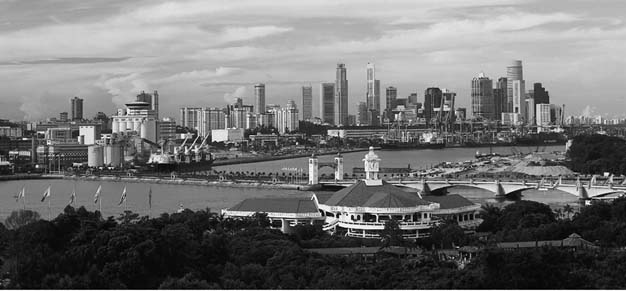
Singapore is an island republic located in southeast Asia. Because of the small size of the island, its prosperity, and its highly efficient record-keeping, cancer cases, similar to other medical statistics in Singapore, are well-noted and accurately listed.
From 1907 until 1912, the first study of migrants suffering from cancer was held at the Tan Tock Seng Hospital, where a detailed report of nasopharyngeal cancer was conducted. Nowadays, most government hospitals in Singapore treat patients with cancer, and there are also private institutions such as the Mount Elizabeth Hospital and Medical Centre (owned by Parkway Holdings) that specialize in oncology.
The Singapore Cancer Society, founded in 1964, has also provided much help to cancer patients. A self-funded voluntary welfare organization, the society has been important in providing solace to sufferers and their families. Initially established by people from the Rotary Club of Singapore, the Lions Club, and the Jaycees, it was officially registered in 1965. It began its work by launching “The Eight Warning Signs of Cancer” program. In the following year, the society became a member of the International Union Against Cancer, with the then-president of Singapore, Yusof bin Ishak, as its first patron.
...
- Loading...
Get a 30 day FREE TRIAL
-
 Watch videos from a variety of sources bringing classroom topics to life
 -
Read modern, diverse business cases
-
Explore hundreds of books and reference titles

Read next

More like this
Sage Recommends
We found other relevant content for you on other Sage platforms.
Have you created a personal profile? Login or create a profile so that you can save clips, playlists and searches