
Entry
Entries A-Z
Subject index
Jet and Rocket Fuels
JET ENGINES AND rockets burn different fuels to achieve jet propulsion. Jets and rockets are growing in numbers, and their fuels have become more sophisticated and carcinogenic in some cases.
Jets and rockets are similar in methods of propulsion. They differ in that jets take their oxidizer from the atmosphere, whereas rockets carry their oxidizer as part of their fuel package. Jets can reach near the top of the stratosphere at 40,000 to 50,000 feet. Rockets can fly in empty space because they do not need to draw oxygen from an atmosphere.
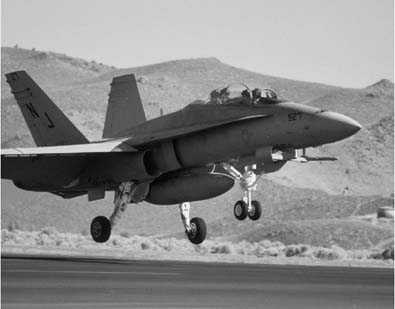
There are more than a dozen types of jet engines for jet aircraft. Most commercial and military jets use turbofan engines. Turboprop and turbojet engines are common as well. The many jet engines use fuels that vary in name and in formulation. Some are formulated for specific aircraft; others represent military designations. In practice, two main fuels are used: JET A-1 and JET B.
The most common jet fuel is JET A-1, which is produced according to an international set of specifications and is the only jet fuel used in the United States. It is an unleaded petroleum-based fuel that uses a type of paraffin.
It has a flash point above 38 degrees C (100 degrees F) and freezes at −47 degrees C. JET B fuel is a naptha–kerosene formulation that is good for cold-weather conditions. Because it has more volatile compounds, it is more flammable than JET A-1. It is dangerous to handle because of its flammability; however, in Arctic cold it is more likely to perform well.
Some jet fuel additives are known carcinogens and exposure presents a risk of cancer to humans.
Jet Fuel Additives and Carcinogens
To enhance their performance, both JET A-1 and JET B contain additives. Antioxidants are included to prevent gumming. These antioxidants are commonly alkylated phenols of some formula.
Antistatic agents are added to dissipate static elec-tricity; otherwise, sparking might start a disastrous fire. A common antistatic formula contains the antistatic compound dinonylaphthylsulfonic acid (DINNSA).
To prevent corrosion, jet fuels contain corrosion inhibitors, which often vary in military and civilian planes. A mixture called DCI-4A is used in civilian planes, and DCI-6A is used in military planes. To prevent icing in the fuel system, icing inhibitors are added to jet fuel. These are generally called FSII agents. Di-EGME is one such mixture.
Studies of both civilian and military jet fuels have concluded that some of the additives are carcinogenic and that others are potentially carcinogenic. The jet fuel JP8, which is a special formula for military jets, contains ethylene dibromide (EDB), a known carcinogen. It has been an additive in leaded gasoline and has been used as a fumigant. Studies of laboratory animals showed that it can produce a variety of toxic effects. Rats exposed to JP8 developed tumors regardless of the routes by which they were exposed. Naphthalene is another component of jet fuel, formed from two benzene rings. Exposure for long periods presents the risk of cancer. Studies of laboratory mice showed that it produced carcinomas on the skins of mice and created bronchiolar adenomas. It is considered to be probably carcinogenic in humans. Workers exposed to it for long periods have developed laryngeal carcinomas, but these cases involved cigarette smokers. Toluene has been used in aviation gasoline and high-octane blending stock. In studies of laboratory rats, the results were inadequate to show that it was a carcinogen.
...
- Loading...
Get a 30 day FREE TRIAL
-
 Watch videos from a variety of sources bringing classroom topics to life
 -
Read modern, diverse business cases
-
Explore hundreds of books and reference titles

Read next

More like this
Sage Recommends
We found other relevant content for you on other Sage platforms.
Have you created a personal profile? Login or create a profile so that you can save clips, playlists and searches