
Entry
Reader's guide
Entries A-Z
Subject index
African Dance in the United States
African dance in the United States is a movement form that has entered the country at the university level from the continent of Africa since the 1950s. African dance, the oldest form of dance in the world, had its academic beginning in American universities in the mid-20th century as a result of the following distinct circumstances:
- the rise in African consciousness due to the Négritude movement, African nationalism, and pan-Africanism, as expressed in the 1950s and 1960s by heads of African states such as Kwame Nkrumah, Léopold Sédar Senghor, and Julius Nyerere
- the development in Africa of governmentsponsored cultural and educational institutions for the purpose of disseminating and preserving African culture
- the desire of African American educators and scholars to advance the scholarship in African and African American Studies beyond European paradigms, which meant that they sought to extend the understanding of African cultural traits and values to all of the Americas and the Caribbean
- the civil rights movement of the 1960s, when emergent voices on university campuses were calling for and insisting upon coursework and disciplines that acknowledged the need for valid scholarship not predicated on colonialist models
- the launching of cultural initiatives such as touring national dance companies that had an impact on the American panorama from Broadway to the university campuses.
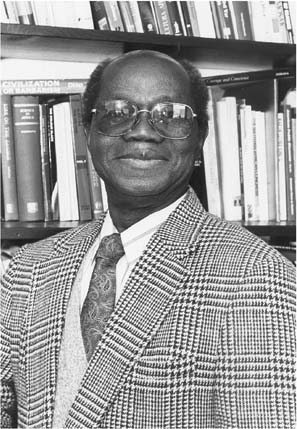
Given the environment created by these circumstances, there was a new awareness around African dance that made it possible for innovative dance companies to appear. Alvin Ailey was the representative of the United States to the first international African festival of arts in Dakar, Senegal in 1965. Subsequently, Ailey's dance company toured the African continent, dancing from Ghana to Ethiopia. However, two professors—Albert Mawere Opoku and Kwabena Nketia of the University of Ghana, Legon—had the greatest impact on the transfer of African dance ideas to the United States. They were the chief promoters of West African dance in the United States. Both Opoku and Nketia worked in universities in America before retiring in Ghana in the 1980s. It was the relationship between them that brought new dances, royal court music, and new African American adherents into the realm of African dance. Subsequently, there were many African masters, such as Olatunji, who came to the United States from Nigeria to teach African dance.
In the African context, dance is always performed to music, so when we speak of African dance it must be understood to include music. African dance has become a feature in many university, civic, and private events, such as homecoming parades and celebrations; convocations and special ceremonies; banquets, arts openings, weddings, birthdays, and fashion shows; opening for featured artists; Black History Month events; Kwanzaa celebrations; Juneteenth Day celebrations; African American arts festivals; liturgical dance dialogue groups and forums; as well as in interactions with the Hispanic community, including Santería, Lukumi, and Palos Montes celebrations.
Actually, most American colleges and universities have neither Black Studies nor African dance as a part of the curriculum. It is rare to find a department of Black Studies in which dance is a major component. Yet it is clear that African dance is a major art form in the African world. African dance is also connected to the presence in the United States of Gamelan orchestras, Caribbean clubs, drum circles, and pow-wows. This is not to say that African dance and music set this precedent but to suggest a simultaneous cultural and academic awakening of international involvement on several American college campuses (e.g., State University of New York College at Brockport, Ohio State University, California Arts, Temple University, and the University of California, Los Angeles).
...
- African American Studies
- Afrocentricity
- Annual Conferences
- Anti-Racism
- Arts
- Associations and Organizations
- American Colonization Society
- American Negro Academy
- Association of Black Psychologists
- Ausar Auset Society
- Black Panther Party for Self-Defense
- Institute of Positive Education
- Institute of the Black World
- National Association for the Advancement of Colored People
- National Black United Fund
- National Urban League
- Organization of Afro-American Unity
- PUSH
- Southern Christian Leadership Conference
- Universal Negro Improvement Association
- Us
- Books
- Afrocentricity
- An Appeal to the Colored Citizens of the World
- Before the Mayflower
- Black Athena
- Black Feminist Thought
- Black Skin, White Masks
- Code Noir
- Dark Ghetto
- Introduction to Black Studies
- Invisible Man
- Kemet, Afrocentricity and Knowledge
- Letter From the Birmingham Jail
- Odu Ifa
- Stolen Legacy
- The Afrocentric Idea
- The Afrocentric Paradigm
- The Autobiography of Malcolm X
- The Black Atlantic
- The Black Jacobins
- The Crisis of the Negro Intellectual
- The Destruction of Black Civilization
- The Mis-Education of the Negro
- The New Negro
- The Philadelphia Negro
- The Psychopathic Racial Personality
- The Souls of Black Folk
- The Wretched of the Earth
- Their Eyes Were Watching God
- They Came Before Columbus
- Campus Politics
- Civil Rights
- Classical Africa
- Concepts
- Affirmative Action
- African Americans and American Communism
- African Cosmology
- African Epistemology
- African Philosophy
- Africological Enterprise
- Class and Caste
- Consciousness
- Creolization
- Diaspora
- Dislocation
- Ethiopianism
- Eurocentrism
- Fanonian Concept of Violence
- Imperialism
- Maat
- Messianism
- Multicultural Education
- Nommo
- Protest Pressure
- Rastafarianism
- Soul
- Talented Tenth
- Westernization
- Culture
- Films
- Institutions
- Intellectual Schools
- Journals
- Legal Issues
- Movements
- African Liberation Day
- All-African People's Revolutionary Party
- Ancient Egyptian Studies Movement
- Back-to-Africa Movement
- Black Consciousness Movement
- Black Power Conference of Newark, New Jersey
- Black Power Movement
- Congress of African Peoples
- Haitian Revolution
- Indigeniste Movement
- Kiswahili Movement
- Mississippi Freedom Democratic Party
- Negro Convention Movement
- Organization of Afro-American Unity
- Republic of New Afrika
- Revolutionary Action Movement
- Newspapers
- Political Issues
- Populations
- Professional Organizations
- Publishers
- Racism
- Religion
- Reparations
- Research Centers
- Resistance
- Theories
- U.S. Constitution
- Loading...
Get a 30 day FREE TRIAL
-
 Watch videos from a variety of sources bringing classroom topics to life
 -
Read modern, diverse business cases
-
Explore hundreds of books and reference titles

Read next

More like this
Sage Recommends
We found other relevant content for you on other Sage platforms.
Have you created a personal profile? Login or create a profile so that you can save clips, playlists and searches