
Entry
Reader's guide
Entries A-Z
Subject index
Seidner, María M. (1938-)
Maria Medina Seidner, whose career in bilingual education spans more than three decades, was herself the product of bilingual schooling. Born in San Juan, Puerto Rico, she started school on the island, receiving academic instruction in Spanish and studying English as a second language. Seidner was the child of a military officer. By the time she graduated from high school, she had attended schools in four different countries and was fluent in Spanish, English, and Italian. At the University of Texas in Austin, she majored in French and received a BAin romance languages in 1960. This entry describes her career.
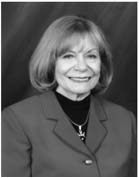
From 1960 to 1968, she taught French and Spanish at the secondary and college level. She left teaching to work at the state department of education. As consultant in French for the Texas Education Agency (TEA) from 1968 to 1971, she provided technical and academic support to foreign-language educators throughout the state. While at the state agency, she became involved in bilingual education, assisting the newly created Office of International and Bilingual Education with workshops and conferences, including the First International Bilingual Bicultural Education Conference, which was held in Austin in 1971. That same year, she completed an MA degree in foreign language education at the University of Texas.
In 1972, as the state of Illinois prepared to implement legislation mandating bilingual education, Seidner moved to Chicago to establish and direct a center to provide training and technical assistance to bilingual education programs throughout the state. The first of its kind, it was an instant success. It became the staff development arm of the state department of education, conducting local, regional, and statewide workshops and providing on-site consultant services to school districts. From 1972 to 1979, under her leadership, the Bilingual Education Service Center grew to encompass multiple projects: the Illinois Resource Center, the Title VII Midwest Resource Center, the Illinois Statewide ESL/Adult Education Center, the Midwest Indochinese Refugee Education Program, the Illinois Bilingual Vocational Education Program, the Illinois Bilingual School Psychologist Network, and others.
During this time, Seidner gained national recognition as a bilingual educator, speaking at state, regional, and national conferences, providing testimony on bilingual education before Congress and the Illinois General Assembly, serving on advisory panels for various agencies, participating in special task forces, and publishing in professional journals. A founding member of the National Association for Bilingual Education, she was actively involved in the organization and served as its third president. She also worked closely with the U.S. Department of Education, serving on the National Advisory Council on Bilingual Education from 1978 to 1982.
In 1979, Seidner joined the Illinois State Board of Education (ISBE) as manager of bilingual education and served in that capacity until 1993. She led the state in developing and implementing new state policies with uniform criteria for identification, assessment, and instruction of English language learners; administrative procedures for evaluating and funding district applications; guidelines and processes for on-site monitoring; and provisions for professional development of bilingual personnel and coordination of federal bilingual programs. She succeeded in establishing collaborative programs with special education, making Illinois one of the first states to provide state certification in bilingual special education.
...
- Family, Communities, and Society
- Accommodation Theory, Second-Language
- Americanization and its Critics
- Attitudes toward Language Diversity
- Benefits of Bilingualism and Heritage Languages
- Bilingual Education in the Press
- Easy and Difficult Languages
- English in the World
- English-Only Organizations
- Heritage Languages in Families
- Hidden Curriculum
- Hispanic Population Growth
- Home/School Relations
- Immigration and Language Policy
- Language Brokering
- Language Loyalty
- Language Restrictionism
- Nationality-Culture Myth
- One Person-One Language (OPOL)
- Peer Pressure and Language Learning
- Raising Bilingual Children
- Spanish Loan Words in U.S. English
- Spanish, Decline in use
- Spanish, The Second National Language
- Transnational Students
- Views of Language Difference
- History
- Americanization and its Critics
- Boarding Schools and Native Languages
- Defense Language Institute
- Early Bilingual Programs, 1960s
- Early Immigrants and English Language Learning
- Equity Struggles and Educational Reform
- German Language Education
- German Language in U.S. History
- Languages in Colonial Schools, Eastern
- Languages in Colonial Schools, Western
- Latino Civil Rights Movement
- National Education Association Tucson Symposium
- Nationalization of Languages
- Navajo Code Talkers
- President's Commission on Foreign Language and International Studies
- Puerto Rico, School Language Policies
- Southeast Asian Refugees
- St. Lambert Immersion Study
- Vietnamese Immigration
- Instructional Designs
- Additive and Subtractive Programs
- Biculturalism
- Bilingual Charter Schools
- Bilingual Special Education
- Costs of Bilingual Education
- Deaf Bilingual Education
- Designation and Redesignation of English Language Learners
- Dual-Language Programs
- English as a Second Language Approaches
- English Immersion
- English or Content Instruction
- Gifted and Talented Bilinguals
- Heritage Language Education
- Indigenous Language Revitalization
- Indigenous Languages as Second Languages
- Literacy and Biliteracy
- Multicultural Education
- Newcomer Programs
- Oyster Bilingual School
- P.S. 25, New York City's First Bilingual School
- Phonics in Bilingual Education
- Program Goals, Purpose of
- Program Quality Indicators
- Pull-Out ESL Instruction
- Sheltered Instruction Observation Protocol
- Spanish, Proactive Maintenance
- Specially Designed Academic Instruction in English
- Transitional Bilingual Education Programs
- Whole Language
- Languages and Linguistics
- Accents and Their Meaning
- Affective Filter
- Baby Talk
- BICS/CALP Theory
- Bilingualism Stages
- Chinese in the United States
- Chinese Language Study, Prospects
- Code Switching
- Cognates, True and False
- Compound and Coordinate Bilingualism
- Comprehensible Input
- Container Theory of Language
- Continua of Biliteracy
- Critical Languages for the United States
- Critical Period Hypothesis
- Discourse Analysis
- Ebonics
- English, First World Language
- First-Language Acquisition
- Indigenous Languages, Current Status
- Indo-European Languages
- Interlanguage
- Japanese Language in Hawai'i
- Language Acquisition Device
- Language Defined
- Language Dominance
- Language Persistence
- Language Registers
- Language Revival and Renewal
- Language Shift and Language Loss
- Language Socialization
- Language Socialization of Indigenous Children
- Learning a Language, Best Age
- Linguistics, an Overview
- Measuring Language Proficiency
- Metalinguistic Awareness
- Modern Languages in Schools and Colleges
- Monitor Model
- Native English Speakers Redefined
- Phonology, Morphology, and Syntax
- Pragmatics
- Second-Language Acquisition
- Semilingualism
- Skills Transfer Theory
- Social Bilingualism
- Spanglish
- Threshold Hypothesis
- Underlying Linguistic Proficiencies
- World Englishes
- People and Organizations
- Alatis, James E.
- Andersson, Theodore
- Baker, Colin
- Bennett, William J.
- Bernal, Joe J.
- Bourne, Randolph S.
- Cárdenas, José A.
- Castro Feinberg, Rosa
- Center for Applied Linguistics, Initial Focus
- Center for Applied Linguistics, Recent Focus
- Chavez, Linda
- Christian, Donna
- Collier, Virginia P.
- Crawford, James
- Cummins, James
- De Avila, Edward
- Epstein, Noel
- Escamilla, Kathy
- Escobedo, Deborah
- Fernández, Ricardo
- Fishman, Joshua A.
- Gómez, Joel
- Gómez, Severo
- García, Eugene E.
- González, Henry B.
- González, Josué M.
- Guerrero, Adalberto
- Hakuta, Kenji
- Haugen, Einar
- Hayakawa, S. I.
- Hogan, Timothy M.
- Hornberger, Nancy
- Kloss, Heinz
- Krashen, Stephen D.
- LaFontaine, Hernán
- Lyons, James J.
- Moll, Luis
- Multicultural Education, Training, and Advocacy (META)
- National Association for Bilingual Education
- National Clearinghouse for Bilingual Education
- Nieto, Sonia
- Office for Civil Rights, U.S. Department of Education
- Office of Bilingual Education and Minority Languages Affairs
- Ogbu, John
- Oyama, Henry
- Pérez-Hogan, Carmen
- Peña, Álbar Antonio
- Porter, Rosalie Pedalino
- Rodríguez, Armando
- Rodríguez, Richard
- Roos, Peter D.
- Roybal, Edward R.
- Ruiz, Richard
- Saville-Troike, Muriel
- Seidner, María M.
- Simon, Paul M.
- Spolsky, Bernard
- Stanford Working Group
- Tanton, John H.
- TESOL, Inc.
- Troike, Rudolph C, Jr.
- Truán, Carlos
- Trueba, Enrique (Henry)
- Unz, Ron
- Urquides, María
- Valdés, Guadalupe
- Wong Fillmore, Lily
- Yarborough, Ralph
- Zamora, Gloria L.
- Zelasko, Nancy
- Policy Evolution
- Castañeda Three-Part Test
- Flores v. State of Arizona
- Lau v. Nichols, Enforcement Documents
- Lau v. Nichols, San Francisco Unified School District's Response
- Lau v. Nichols, the Ruling
- Méndez v. Westminster
- Affirmative Steps to English
- Amendment 31 (Colorado)
- Aspira Consent Decree
- Bilingual Education as Language Policy
- Canadian and U.S. Language Policies
- Chacón-Moscone Legislation
- Civil Rights Act of 1964
- English for the Children Campaign
- Equal Educational Opportunity Act of 1974
- Exit Criteria for English Language Learner Programs
- Federal Court Decisions and Legislation
- High-Stakes Testing
- Home Language Survey
- Immigration and Language Policy
- Improving America's Schools Act of 1994
- Labeling Bilingual Education Clients: LESA, LEP, and ELL
- Language Education Policy in Global Perspective
- Language Policy and Social Control
- Language Rights in Education
- Maintenance Policy Denied
- National Defense Education Act of 1958
- National Literacy Panel
- Native American Languages, Legal Support for
- No Child Left Behind Act of 2001, Testing Requirements
- No Child Left Behind Act of 2001, Title I
- No Child Left Behind Act of 2001, Title III
- Official English Legislation, Favored
- Official English Legislation, Position of English Teachers on
- Official Language Designation
- Paradox of Bilingualism
- Proposition 203 (Arizona)
- Proposition 203 (Arizona), Impact of
- Proposition 227 (California)
- Proposition 227 (California), Impact of
- Question 2 (Massachusetts)
- Texas Legislation (HB 103 and SB 121)
- Title VII, Elementary and Secondary Education Act, 1967 Senate Hearings
- Title VII, Elementary and Secondary Education Act, Key Historical Marker
- Title VII, Elementary and Secondary Education Act, Subsequent Amendments
- Title VII, Elementary and Secondary Education Act, Text (Appendix B)
- Transitional Bilingual Education Model Questioned
- U.S. Bilingual Education Viewed from Abroad
- U.S. Commission on Civil Rights Report
- Undocumented Students' Rights
- Voter Initiatives in Education
- Related Social Sciences
- Acculturation
- Affective Dimension of Bilingualism
- Assimilation
- Bilingualism in Holistic Perspective
- Brain Research
- Cognitive Benefits of Bilingualism
- Cultural Capital
- Cultural Deficit and Cultural Mismatch Theories
- Culture Shock
- Deficit-Based Education Theory
- Enculturation
- Ethnocentrism
- Home Language and Self-Esteem
- Language and Identity
- Language and Thought
- Languages and Power
- Latino Attitudes toward English
- Melting-Pot Theory
- Program Effectiveness Research
- Social Class and Language Status
- Social Class and School Success
- Status Differences among Languages
- U.S. Census Language Data
- Views of Bilingual Education
- Vygotsky and Language Learning
- Teaching and Learning
- Academic English
- Audio-Lingual Method
- Best English to Learn
- Bilingual Paraprofessionals
- Bilingual Teacher Licensure
- Classroom Discourse
- Communicative Approach
- Communities of Practice
- Concurrent Translation Method
- Contrastive Analysis
- Credentialing Foreign-Trained Teachers
- Critical Literacy
- Culturally Competent Teaching
- English, How Long to Learn
- Error Analysis
- Four-Skills Language Learning Theory
- Grammar-Translation Method
- Language Experience Approach to Reading
- Language Learning in Children and Adults
- Language Study Today
- Literacy Instruction, First and Second Language
- Natural Approach
- Primary-Language Support
- Professional Development
- Proficiency, Fluency, and Mastery
- School Leader's Role
- Situated Learning
- Social Learning
- Spanish-Language Enrollments
- Teacher Certification by States
- Teacher Preparation, Then and Now
- Teacher Qualifications
- Technology in Language Teaching and Learning
- Transformative Teaching Model
- Loading...
Get a 30 day FREE TRIAL
-
 Watch videos from a variety of sources bringing classroom topics to life
 -
Read modern, diverse business cases
-
Explore hundreds of books and reference titles

Read next

More like this
Sage Recommends
We found other relevant content for you on other Sage platforms.
Have you created a personal profile? Login or create a profile so that you can save clips, playlists and searches