
Entry
Reader's guide
Entries A-Z
Subject index
Rites of Passage
Variously known as “life crisis” ceremonies, rites of passage, or by the French term rites de passage,this complex of practices includes birthing, coming of age, commencement exercises, marriage, ordination, recruitment into secret societies or military formations, accession to high office, and mortuary processes. In all known human societies, rituals of status transition are highly organized and consume considerable material resources and social energy.
For nearly a century, anthropological approaches to rites of passage have been profoundly influenced by Van Gennep's classic protōstructuralist model of the “tripartite” structure of these commonly occurring rituals, a formulation that has shown remarkable resilience and longevity in the intellectual history of the discipline. According to Van Gennep, and as famously developed by Victor Turner, such rites commence with the radical separation of the person or persons being transformed, often marked through special adornment, locale, or comportment. The subject then enters into a special interstitial or intermediate state—in Turner's terms, “betwixt and between” conventional social statuses or categories—in which he or she is neither student nor graduate, child nor adult, unmarried nor married, layman nor priest, heir-apparent nor king. During this “liminal period,” the person undergoing ritual transformation is often subject to special prohibitions and precautions; he or she may be apprehended as especially pure, sacred, stigmatized, or polluted and may be subjected to pain, humiliation, and heightened risks. The person undergoing such a transformative rite is often, in effect, reduced to a subordinate or fluid state subjected to collectively imposed refashioning. This in-between period is often characterized by paradoxical or dramatic reversals of ordinary behavior, often involving real or symbolic violence, exaggerated humor, and carnivalesque elaboration of the lower half of the body; one needs, in effect, to step outside of normal society and socialized frameworks in order to alter one's social position. In the final stage of reaggregation, during which basic principles of social life are celebrated or reinvigorated, the subject is reintegrated into normal life, usually into a different (often higher-ranked) social role than that occupied before the rite.
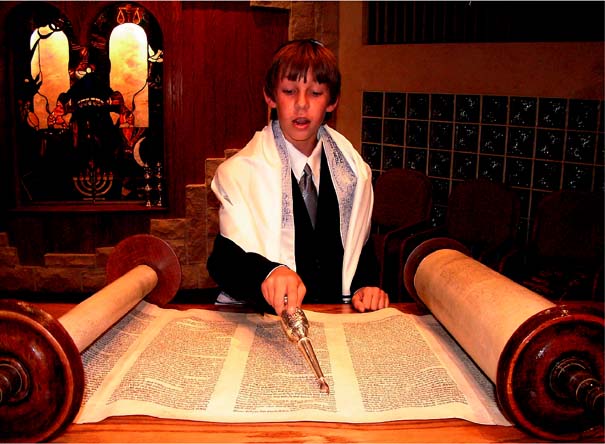
Initiation rites, among the most highly elaborated rites of passage, often emphasize the detachment of the initiate from his or her prior links to childhood and exclusively domestic realms by incorporating images of birth and death; they often involve the physical isolation of initiates, often according to principles of strict gender segregation, as well as practices of physical incision, quite literally “cutting” earlier bonds by rupturing the body's surfaces. Often, initiatory cutting is directed towards the organs of generation (the male foreskin, or, less commonly, the female clitoris or labia), signaling, in part, that sexual pleasure and libidinal drives are henceforth to be subordinated to larger, collectively regulated projects of social and symbolic reproduction. Such rites may, at the manifest level, intensify categorical distinctions between human and animal, as well as male and female, while at other levels blurring or transcending these contrastive schemes.
Their tripartite sequence, the extraordinary qualities of the liminal phase, and the bodily symbolism of radical transformation render rites of passage highly appropriate for dramatizing transformations in persons other than the rite's formal subjects. Those organizing, performing, or attending the ritual often take on certain liminal, interstitial qualities during the ceremony and undergo significant (if subtle or backgrounded) transformations and shifts in status. Rites of passage are thus nearly always collective enterprises that proceed upon multiple tracks, establishing important connections and distinctions among varied persons and groups beyond the proximate, central foci of ritual attention.
...
- Applied Anthropology
- Action anthropology
- Aesthetic appreciation
- Affirmative action
- ALFRED: The ALlele FREquency Database
- Anthropology and business
- Anthropology and the Third World
- Anthropology, careeers in
- Anthropology, clinical
- Anthropology, economic
- Anthropology, history of
- Anthropology, practicing
- Anthropology, social
- Anthropology, visual
- Artificial intelligence
- Bioethics and anthropology
- Bioinformatics
- Biomedicine
- Biometrics
- Carbon-14 dating
- Counseling
- Dating techniques
- Dating techniques, radiometric
- Dating techniques, ralative
- Demography
- Dendrochronology
- Dispute resolution
- DNA testing
- Ecology and anthropology
- Ecology, human behavioral
- Economics and anthropology
- Environmental ethics
- Ethics and anthropology
- Ethnoecology
- Ethnomedicine
- Ethnopharmacology
- Ethnopsychiatry
- Ethnoscience
- Ethnosemantics
- Field methods
- Forensic anthropology
- Forensic artists
- Geomagnetism
- Health care, alternative
- Human rights and anthropology
- Human rights in the global society
- Intercultural education
- Irrigation
- Justice and anthropology
- Law and anthropology
- Law and society
- Medical genetics
- Multiculturalism
- Museums
- Native studies
- New dating techniques
- Paleomagnetism
- Political anthropology
- Political economy
- Potassium-Argon dating
- Rights of indigenous peoples today
- Tutankhamun and Zahi Hawass
- Twin studies
- United Nations and anthropology
- Uranium-Lead dating
- Urban anthropology
- Urban ecology
- Women's studies
- Y-STR DNA
- Zoos
- Archaeology
- Abu Simbel
- Acheulean culture
- Acropolis
- Altamira cave
- Angkor Wat
- Anthropology, history of
- Archaeology
- Archaeology and gender studies
- Archaeology, biblical
- Archaeology, environmental
- Archaeology, maritime
- Archaeology, medieval
- Archaeology, salvage
- Architectural anthropology
- Atapuerca
- Aurignacian culture
- Axes, hand
- Aztec agriculture
- Babylon
- Binford, Lewis Roberts
- Bingham, Hiram
- Blombos cave
- Boucher de Perthes, Jacques
- Braidwood, Robert John
- Breuil, Henri
- Burial mounds
- Carter, Howard
- Cave art
- Celtic Europe
- Chichen Itza
- City, history of
- Clovis culture
- Coliseum
- Copper age
- Crete, ancient
- Egypt, ancient
- Egyptology
- Eoliths
- Excavation
- Fa Hien cave
- Fagan, Brian M.
- Fayoum culture
- Folsom culture
- Ghost towns
- Graves
- Great Wall of China
- Harappa
- Historicism
- Indus civilization
- Iron age
- Jarmo
- Koba
- Lascaux cave
- Lazaret cave
- Leakey, Mary D.
- Levalloisian tradition
- Llano culture
- Machu Picchu
- Mayas
- Mesolithic cultures
- Mesopotamian civilization
- Metallurgy
- Middens
- Modjokerto
- Mohenjo Daro
- Monte Verde
- Mummies and mummification
- Museums
- National Museum of Anthropology
- Natufian culture
- Nazca culture
- Neandertal burials
- Neandertal evidence
- Neandertal sites
- Neolithic cultures
- Ochre
- Ohio Hopewell
- Oldowan culture
- Olduvai Gorge
- Olmecs
- Orce
- Petra
- Petroglyphs
- Pictographs
- Pottery and ceramics
- Prehistory
- Pu'uhonua o Honaunau
- Pyramids
- Ramses II
- Rapa Nui
- Rock art
- Rome, ancient
- Sahara anthropology
- Sangiran
- Shanidar cave
- Stonehenge
- Sumerian civilization
- Taj Mahal
- Technology
- Temples
- Tenoctitlan
- Terra Amata
- Tikal
- Tiwanaku [Tiahuanaco]
- Tools and evolution
- Troy
- Tutankhamun and Zahi Hawass
- Ubirr
- Ur
- Urbanism in ancient Egypt
- Uxmal
- Venus of Willendorf
- Vikings
- War, archaeology of
- Zafarraya cave
- Ziggurats
- Zooarchaeology
- Biography
- Aquinas, Thomas
- Ardrey, Robert
- Aristotle
- Arsuaga, J. L.
- Auel, Jean Marie
- Bakhtin, Mikhail
- Bass, William
- Bates, Daniel G.
- Becker, Gary S.
- Benedict, Ruth
- Bergson, Henri
- Bermudez de Castro, J. M.
- Binford, Lewis Roberts
- Bingham, Hiram
- Black, Davidson
- Blumenbach, Johann Friedrich
- Boas, Franz
- Boucher de Perthes, Jacques
- Bourdieu, Pierre
- Brace, C. Loring
- Braidwood, Robert John
- Breuil, Henri
- Briggs, Jean L.
- Bruno, Giordano
- Buber, Martin
- Buechel, Eugene
- Bunzel, Ruth
- Carpenter, C. R.
- Carson, Rachel
- Carter, Howard
- Cavalli-Sforza, Luigi Luca
- Cazden, Courtney B.
- Chagnon, Napolean
- Champollion, Jean-François
- Childe, Vere Gordon
- Chomsky, Noam
- Comte, Auguste
- Condorcet, Marquis de
- Coon, Carleton S.
- Cousteau, Jacques Yves
- Croizat, Leon C.
- Danilevsky, Nikolaj Jakovlevich
- Darrow, Clarence
- Dart, Ramond A.
- Darwin, Charles
- Dawkins, Richard
- de Angulo, Jaime
- de Waal, Frans B. M.
- Deleuze, Gilles
- Deloria, Ella Cara
- Dennett, Daniel C.
- Derrida, Jacques
- DeVore, Irven
- Dewey, John
- Diamond, Jared
- Douglas, Mary
- Dubois, Eugene
- Durkheim, David Émile
- Eliade, Mircea
- Empedocles
- Engelbrecht, William Ernst
- Engels, Friedrich
- Evans-Pritchard, Edward E.
- Fagan, Brian M.
- Farber, Marvin
- Feuerbach, Ludwig
- Firth, Raymond
- Fortes, Meyer
- Fossey, Dian
- Foucault, Michel
- Frazer, Sir James
- Freeman, Derek
- Freud, Sigmund
- Fried, Morton H.
- Fromm, Erich
- Galdikas, Biruté Mary F.
- Galton, Francis
- Gandhi, Mahatma
- Geertz, Clifford R.
- Gluckman, Max
- Goodall, Jane
- Goode, William Josiah
- Gosse, Philip
- Gramsci, Antonio
- Greenberg, Joseph
- Gutenberg, Johannes
- Haddon, A. C.
- Haeckel, Ernst
- Harlow, Harry F.
- Harris, Marvin
- Harrisson, Barbara
- Heath, Shirley Bryce
- Hegel, G. W. F.
- Heidegger, Martin
- Heraclitus
- Herskovits, Melville
- Heyerdahl, Thor
- Hobbes, Thomas
- Hoebel, E. Adamson
- Howell, F. Clark
- Hrdlicka, Ales
- Hume, David
- Huntington, Samuel P.
- Johanson, Donald C.
- Jones, William
- Kant, Immanuel
- Kardiner, Abram
- Keith, Sir Arthur
- Kettlewell, H.B.D.
- King, Dr. Martin Luther, Jr.
- Kluckhohn, Clyde K. M.
- Kohler, Wolfgang
- Kovalevskii, Aleksandr O.
- Kovalevskii, Vladimir O.
- Kroeber, Alfred Louis
- Kropotkin, Prince Peter A.
- Lévi-Strauss, Claude
- Lévy-Bruhl, Lucien
- LaBarre, Weston
- Lafitau, Joseph-Francois
- Leakey, Louis S. B.
- Leakey, Mary D.
- Leakey, Meave Epps
- Leakey, Richard E. F.
- Lenin, Vladimir I. U.
- Leonardo da Vinci
- Levinas, Emmanuel
- Libby, Willard
- Linnaeus, Carolus
- Linton, Ralph
- Lorenz, Konrad
- Lovejoy, C. Owen
- Lucretius
- Lyell, Sir Charles
- Maine, Henry Sumner
- Malinowski, Bronislaw
- Malthus, Thomas
- Manheim, Mary Huffman
- Mann, Thomas
- Marett, Robert Ranulph
- Marx, Karl
- Mauss, Marcel
- McCown, Theodore D.
- McLuhan, Marshall
- Mead, Margaret
- Mehan, Hugh
- Mintz, Sidney Wilfred
- Montagu, Ashley
- Montaigne, Michel Eyquem de
- Morgan, Elaine
- Morgan, Lewis Henry
- Morris, Desmond
- Muller, Friedrich Maximillian
- Murdock, George Peter
- Napier, J. R.
- Naroll, Raoul
- Nash, June C.
- Nietzsche, Friedrich
- Oakley, Kenneth Page
- Ogbu, John
- Oparin, A. I.
- Orwell, George
- Park, Robert Ezra
- Pascal, Blaise
- Patterson, Francine G.
- Pike, Kenneth L.
- Pinker, Steven
- Popper, Karl
- Radcliffe-Brown, A. R.
- Radin, Paul
- Ramses II
- Rappaport, Roy
- Redfield, Robert
- Reichard, Gladys
- Rivers, W.H.R.
- Robbins, Richard H.
- Rowe, John Howland
- Rumbaugh, D. M.
- Russell, Dale Allen
- Sagan, Carl
- Sahlins, Marshall D.
- Sapir, Edward
- Saussure, Ferdinand de
- Savage-Rumbaugh, Susan
- Schaller, George B.
- Schliemann, Heinrich
- Schmidt, Wilhelm
- Schneider, David
- Schwartz, Jeffrey H.
- Scopes, John
- Service, Elman R.
- Simpson, George Gaylord
- Smith, Grafton Elliot
- Smith, William
- Smuts, Barbara B.
- Spencer, Herbert
- Spengler, Oswald
- Steward, Julian H.
- Strum, Shirley C.
- Sumner, William Graham
- Tattersall, Ian
- Tax, Sol
- Teilhard de Chardin, Pierre
- Thomas, Elizabeth Marshall
- Toynbee, Arnold Joseph
- Turnbull, Colin M.
- Turner, Edith
- Tylor, Edward Burnett
- Unamuno, Miguel de
- Vayda, Andrew
- Vernadsky, Vladimir Ivanovich
- Verne, Jules
- Virchow, Rudolf Lothar
- von Goethe, Johann Wolfgang
- von Humboldt, Alexander
- Voros, Gyozo
- Vygotsky, Lev Semenovich
- Wagner, Richard
- Wallace, Alfred Russel
- Wallace, Anthony F. C.
- Wallerstein, Immanuel
- Washburn, Sherwood L.
- Wegener, Alfred
- Weidenrich, Franz
- Wells, H. G.
- White, Leslie A.
- White, Timothy
- Whitehead, Alfred North
- Whorf, Benjamin Lee
- Williams, Raymond
- Wilson, Edward O.
- Wissler, Clark
- Wolf, Eric Robert
- Xenophanes
- Yerkes, Robert M.
- Cultural/Social Anthropology
- Aborigines
- Adaptation, cultural
- Agricultural revolution
- Agriculture, intensive
- Agriculture, slash-and-burn
- Aleuts
- Algonguians
- Altamira cave
- Anasazi
- Anthropology, cultural
- Anthropology, history of
- Aotearoa (New Zealand)
- Ape culture
- Argentina
- Asante
- Asia
- Athabascan
- Australia
- Australian aborigines
- Aymara
- Balkans
- Baluchistan
- Benedict, Ruth
- Berdache
- Boas, Franz
- Brazil
- Bride price
- Cannibalism
- Caribs
- Caste system
- Celtic Europe
- Chachapoya Indians
- Chants
- Childhood
- Childhood studies
- Clans
- Collectors
- Configurationism
- Copper Age
- Cross-cultural research
- Cuba
- Cultivatiion, plant
- Cults
- Cultural conservation
- Cultural constraints
- Cultural convergence
- Cultural ecology
- Cultural relativism
- Cultural traits
- Cultural tree of life
- Culture
- Culture and personality
- Culture area concept
- Culture change
- Culture of poverty
- Culture shock
- Culture, characteristics of
- Cyberculture
- Darkness in El Dorado controversy
- Diffusionism
- Dowry
- El Ceren
- Elders
- Emics
- Endogamy
- Eskimo acculturation
- Eskimos
- Ethnocentrism
- Ethnographer
- Ethnographic writing
- Ethnography
- Ethnohistory
- Ethnology
- Etics
- Eudyspluria
- Evans-Pritchard, Edward E.
- Exogamy
- Family, extended
- Family, forms of
- Family, nuclear
- Feasts and Festivals
- Feuding
- Fieldwork, ethnographic
- Fiji
- Firth, Raymond
- Folk culture
- Folk speech
- Folkways
- Frazer, Sir James
- Freeman, Derek
- French structuralism
- Functionalism
- Gangs
- Geertz, Clifford R.
- Genocide
- Gerontology
- Globalization
- Great Wall of China
- Guarani Nandeva Indians
- Gypsies
- Haidas
- Haiti
- Harris, Marvin
- Hinduism
- Homosexuality
- Hopi Indians
- Horticulture
- Hottentots
- Huari [Wari]
- Human competition and stress
- Ik
- Indonesia
- Informants
- Inoku Village
- Intelligence
- Inuit
- IQ tests
- Iron Age
- Iroquoian Nations, Northern
- Iroquois
- Irrigation
- Israel
- Jewelry
- Jews
- Kibbutz
- Kinship and descent
- Kinship terminology
- Kluckhohn, Clyde K. M.
- Koba
- Kroeber, Alfred Louis
- Kula ring
- Kulturkreise
- Kung Bushmen
- Kwakiutls
- LaBarre, Weston
- Labor
- Labor, division of
- Lafitau, Joseph-François
- Language and culture
- Lapps
- Lascaux cave
- Life cycle, human
- Lineage systems, segmentary
- Māori
- Maasai
- Malinowski, Bronislaw
- Mana
- Manioc beer
- Marquesas
- Marriage
- Matriarchy
- Mbuti Pygmies
- Mead, Margaret
- Memes
- Mexico
- Miami Indians
- Migrations
- Modal personality
- Mongolia
- Monogamy
- Mores
- Morgan, Lewis Henry
- Multiculturalism
- Mundugamor
- Music
- Native Peoples of Central and South America
- Native Peoples of the Great Plains
- Native Peoples of the United States
- Navajo
- Nomads
- Objectivity in ethnography
- Ojibwa
- Oldowan culture
- Olmecs
- Omaha Indians
- Onas
- Oral literature
- Orality and anthropology
- Ornamentation
- Pacific rim
- Pacific seafaring
- Panama
- Patriarchy
- Peasants
- People's Republic of China and Taiwan
- Peyote rituals
- Political organizations
- Political science
- Polyandry
- Polygamy
- Polygyny
- Polynesians
- Population explosion
- Potlatch
- Psychiatry, transcultural
- Qing, the Last Dynasty of China
- Quechua
- Radcliffe-Brown, A.R.
- Rank and status
- Rarotonga
- Redfield, Robert
- Rites of passage
- Role and status
- Sambungmachan
- Samburu
- Samoa
- San Bushmen
- Sardinia
- Sartono
- Sex identity
- Sex roles
- Sexual harassment
- Sexuality
- Siberia
- Simulacra
- Slavery
- Social structures
- Societies, class
- Societies, complex
- Societies, egalitarian
- Societies, rank
- Societies, secret
- Sociobiology
- Speech, folk
- Stereotypes
- Steward, Julian H.
- Structuralism
- Subcultures
- Sudanese society
- Symboling
- Tahiti
- Taj Mahal
- Tasmania
- Tax, Sol
- Technology
- Textiles and clothing
- Thomas, Elizabeth Marshall
- Tierra del Fuego
- Tikopia
- Tlingit
- Tlingit culture
- Tonga
- Travel
- Tswana Bantu
- Turnbull, Colin M.
- Tylor, Edward Burnett
- Ubirr
- Untouchables
- Urban legends
- Vanishing cultures
- Venezuela
- Venus of Willendorf
- Verification in ethnography
- Villages
- War, anthropology of
- White, Leslie A.
- Work and skills
- Yabarana Indians
- Yaganes
- Yanomamo
- Zande
- Zapotecs
- Zulu
- Zuni Indians
- Evolution
- Adaptation, biological
- Ape biogeography
- Aquatic ape hypothesis
- Arboreal hypothesis
- Ardrey, Robert
- Australopithecines
- Biological anthropology
- Biological anthropology and neo-Darwinism
- Black, Davidson
- Brain, evolution of primate
- Catastrophism
- Cladistics
- Creationism versus geology
- Darrow, Clarence
- Dart, Raymond A.
- Darwin and Germany
- Darwin and India
- Darwin and Italy
- Darwin, Charles
- Darwinism versus Lamarckism
- Darwinism, modern
- Darwinism, social
- Dawkins, Richard
- Dennett, Daniel C.
- Diamond, Jared
- Dinosaurian hominid
- Dropithecus
- Dubois, Eugene
- Evolution education controversy
- Evolution, arc of
- Evolution, disbelief in
- Evolution, human
- Evolution, models of
- Evolution, molecular
- Evolution, organic
- Evolutionary anthropology
- Evolutionary epistemology
- Evolutionary ethics
- Evolutionary ontology
- Evolutionary psychology
- Extinction
- Fossil record
- Fossils
- Galapagos Islands
- Genetics, human
- Gigantopithecus
- Haeckel, Ernst
- Harris, Marvin
- Hominid taxonomy
- Hominization, issues in
- Hominoids
- Homo antecessor
- Homo erectus
- Homo ergaster
- Homo habilis
- Homo sapiens
- Howell, F. Clark
- Hrdlicka, Ales
- Human canopy evolution
- Humans and dinosaurs
- India and evolution
- Integrity, dynamic
- Johanson, Donald C.
- Kenyanthropus platyops
- Kenyapithecus wickeri
- Leakey, Louis S. B.
- Leakey, Mary D.
- Leakey, Meave Epps
- Leakey, Richard E. F.
- Life, origin of
- Lovejoy, C. Owen
- Lucy reconstruction models
- Mass extinctions
- Meganthropus
- Monkey Trial [1925]
- Monogenesis versus polygenesis
- Morgan, Elaine
- Morgan, Lewis Henry
- Morphology versus molecules in evolution
- Morris, Desmond
- Napier, J. R.
- Narmada man
- Neandertal evidence
- Neandertals
- Neo-Darwinism
- Neo-Darwinism, origin of
- Non-Darwinian evolutionary mechanisms
- Olduvai Gorge
- Oparin, A. I.
- Orangutan-human evolution
- Oreopithecus
- Primate extinction
- Primate morphology and evolution
- Russel, Dale Allen
- Russia and evolution
- Sahelanthropus tchadensis
- Schwartz, Jeffrey H.
- Scopes, John
- Selection, natural
- Sexual selection
- Spencer, Herbert
- State Darwin Museum, Moscow, Russia
- Tattersall, Ian
- Teilhard de Chardin, Pierre
- Theories
- Tylor, Edward Burnett
- Uniformitarianism
- Vernadsky, Vladimir Ivanovich
- Wallace, Alfred Russel
- Weidenrich, Franz
- White, Leslie A.
- White, Timothy
- Zinjanthropus boisei
- Geography/Geology
- Acheulean culture
- Acropolis
- Altamira cave
- Amazonia
- Aotearoa (New Zealand)
- Ape biogeography
- Arctic
- Argentina
- Asia
- Australia
- Axes, hand
- Biogeography
- Brazil
- Carbon-14 dating
- Catastrophism
- Cave art
- Clovis culture
- Continental drift
- Cuba
- Darwin, Charles
- Dating techniques
- Dating techniques, radiometric
- Dating techniques, relative
- Eoliths
- Fa Hien cave
- Fiji
- Folsom culture
- Galapagos Islands
- Geologic column
- Geology
- Geomagnetism
- Graves
- Haiti
- Heyerdahl, Thor
- Israel
- Lascaux cave
- Leonardo da Vinci
- Levalloisian tradition
- Lyell, Charles
- Machu Picchu
- Marquesas
- Mexico
- Mongolia
- Nazca culture
- New dating techniques
- Ochre
- Oldowan culture
- Olduvai Gorge
- Pacific rim
- Paleomagnetism
- Paleontology
- Paluxy footprints
- Peru
- Petra
- Petroglyphs
- Pictographs
- Pierre Teilhard de Chardin
- Potassium-Argon dating
- Rapa Nui
- Rock art
- Samoa
- Sardinia
- Siberia
- Siwalik Hills
- Smith, William
- Stonehenge
- Stratigraphy
- Tierra del Fuego
- Uniformitarianism
- Uranium-Lead dating
- Venezuela
- Wegener, Alfred
- Linguistics
- Anatomy and physiology of speech
- Anthropology, history of
- Ape communication
- Ape intelligence
- Ape language
- Artificial intelligence
- Champollion, Jean-François
- Chants
- Chomsky, Noam
- Cognitive science
- Computer languages
- Computers and humankind
- Counseling
- Culture
- Ethnographic writing
- Ethnosemantics
- Folk speech
- Generative grammar
- Global language
- Glottochronology
- Intelligence
- Kanzi
- Kinship terminology
- Koko (lowland gorilla)
- Lévi-Strauss, Claude
- Language
- Language and biology
- Language and culture
- Language use, sociology of
- Language, animal
- Language, classification of
- Language, origin of
- Language, types of
- Linguistic reconstruction
- Linguistics, historical
- Lingusitics, transformational
- Memes
- Myths and mythology
- Oral literature
- Orality and anthropology
- Paralanguage
- Paralinguistic communication
- Patterson, Francine G.
- Phonetics
- Phonology
- Protolanguage
- Sapir-Whorf hypothesis
- Sapir, Edward
- Semantics, ethnographic
- Sociolinguistics
- Speech, folk
- Swahili
- Symboling
- Universals in culture
- Universals in language
- Vanishing languages
- Washoe
- Whorf, Benjamin Lee
- Paleontology
- Apes, fossil
- Atapuerca
- Australopithecines
- Black, Davidson
- Coon, Carleton S.
- Dart, Raymond A.
- Dryopithecus
- Dubois, Eugene
- Evolution, human
- Fa Hien cave
- Fossil record
- Fossils
- Gigantopithecus
- Graves
- Hominid taxonomy
- Hominization, issues in
- Hominoids
- Homo antecessor
- Homo erectus
- Homo ergaster
- Homo habilis
- Homo sapiens
- Howell, F. Clark
- Hrdlicka, Ales
- Human paleontology
- Humans and dinosaurs
- Java man
- Johanson, Donald C.
- Kennewick man
- Kenyanthropus platyops
- Kenyapithecus wickeri
- Lazaret cave
- Leakey, Louis S. B.
- Leakey, Mary D.
- Leakey, Meave Epps
- Leakey, Richard E. F.
- Leonardo da Vinci
- Lucy reconstruction models
- Meganthropus
- Mungo lady/man
- Napier, J. R.
- Neandertal burials
- Neandertal evidence
- Neandertal sites
- Neandertals
- Olduvai Gorge
- Oreopithecus
- Paleoanthropology
- Paleoecology
- Paleontology
- Palynology
- Sahelanthropus tchadensis
- Schwartz, Jeffrey H.
- Shanidar cave
- Siwalik Hills
- Taphonomy
- Tattersall, Ian
- Teilhard de Chardin, Pierre
- Weidenrich, Franz
- Xenophanes
- Zafarraya cave
- Zinjanthropus boisei
- Zooarchaeology
- Philosophy
- Altruism
- Anthropology, philosophical
- Bergson, Henri
- Bruno, Giordano
- Buber, Martin
- Categorical imperative
- Comte, Auguste
- Condorcet, Marguis de
- Critical realism
- Deleuze, Gilles
- Dennett, Daniel C.
- Derrida, Jacques
- Dewey, John
- Empedocles
- Engels, Friedrich
- Enlightenment versus postmodernism
- Enlightenment, age of
- Entelechy
- Environmental ethics
- Environmental philosophy
- Essentialism
- Ethics and anthropology
- Evolutionary epistemology
- Evolutionary ethics
- Evolutionary ontology
- Feuerbach, Ludwig
- Fromm, Erich
- Hegel, G. W. F.
- Heidegger, Martin
- Heraclitus
- Hermeneutics
- Hobbes, Thomas
- Human dignity
- Human excellence
- Humanism, secular
- India, philosophies of
- Integrity, dynamic
- Kant, Immanuel
- Kropotkin, Prince Peter A.
- Lucretius
- Marx, Karl
- Marxism
- Naturalism
- Neo-Marxism
- Nietzsche, Friedrich
- Pantheism
- Philosophy, dynamic
- Popper, Karl
- Positivism
- Postmodernism
- Pragmatism
- Science, philosophy of
- Spencer, Herbert
- Teilhard de Chardin, Pierre
- Teleology
- Theories
- Time
- Unamuno, Miguel de
- Vernadsky, Vladimir Ivanovich
- Whitehead, Alfred North
- Xenophanes
- Psychology
- Aggression
- Alienation
- Altruism
- Ape agression
- Ape cognition
- Ape communication
- Ape intelligence
- Ape language
- Apollonian
- Ardrey, Robert
- Artificial intelligence
- Behavior, collective
- Benedict, Ruth
- Childhood
- Civil disobedience
- Cognitive science
- Configurationism
- Conflict
- Consciousness
- Counseling
- Crime
- Criminology and genetics
- Cross-cultural research
- Cultural constraints
- Cultural relativism
- Culture and personality
- Culture shock
- Dementia
- Dennett, Daniel C.
- Deviance
- Ecology, human behavioral
- Enculturation
- Ethnocentrism
- Ethnopsychiatry
- Ethology, cognitive
- Eudysphoria
- Evolutionary ethics
- Evolutionary psychology
- Folkways
- Forensic artists
- Forensic psychologists
- Freud, Sigmund
- Friendships
- Fromm, Erich
- Gangs
- Harlow, Harry F.
- Human competition and stress
- Human excellence
- Humankind, psychic unity of
- Incest taboo
- Intelligence
- Intelligence and genetics
- IQ tests
- Kanzi
- Kluckhohn, Clyde K. M.
- Koko (lowland gorilla)
- Kroeber, Alfred Louis
- Lorenz, Konrad
- Mead, Margaret
- Modal personality
- Mores
- Morris, Desmond
- Nationalism
- Neo-Freudianism
- Neurotheology
- Nietzsche, Friedrich
- Norms
- Pinker, Steven
- Psychiatry, transcultural
- Psychology and genetics
- Reciprocity
- Sex identity
- Sex roles
- Sexuality
- Taboos
- Territoriality
- Twin studies
- Washoe
- Xenophobia
- Physical/Biological Anthropology
- Acheulean culture
- Adaptation, biological
- Altamira cave
- Anatomy and physiology of speech
- Anthropology, history of
- Anthropometry
- Ape agression
- Ape biogeography
- Ape cognition
- Ape communication
- Ape intelligence
- Apes, fossil
- Apes, greater
- Apes, lesser
- Aquatic ape hypothesis
- Arboreal hypothesis
- Ardrey, Robert
- Artificial life
- Atapuerca
- Aurignacian culture
- Australopithecines
- Axes, hand
- Baboons
- Biological anthropology
- Biological anthropology and neo-Darwinism
- Biomedicine
- Biometrics
- Bipedal locomotion
- Black, Davidson
- Blood groups
- Blumenbach, Johann Friedrich
- Bonobos
- Bonobos in captivity
- Brace, C. Loring
- Brachiation
- Brain, evolution of primate
- Brain, human
- Brain, primate
- Cebids
- Cercopithecines
- Chimpanzees
- Chimpanzees and bonobos, differences
- Chimpanzees in captivity
- Chimpanzees, saving
- Colobines
- Coon, Carleton S.
- Craniometry
- Dart, Raymond A.
- Darwin, Charles
- de Waal, Frans B. M.
- DeVore, Irven
- Diamond, Jared
- Dinosaurian hominid
- Diseases
- DNA molecule
- DNA recombinant
- DNA testing
- Dryopithecus
- Dubois, Eugene
- El Ceren
- Eugenics
- Eve, mitochrondrial
- Evolutioin, human
- Forensic anthropology
- Fossey, Dian
- Galdikas, Biruté Mary F.
- Genetics, human
- Gibbons
- Gigantopithecus
- Goodall, Jane
- Gorillas
- Gorillas in captivity
- Gorillas, saving
- Graves
- Grooming
- Haeckel, Ernst
- HIV/AIDS
- Hominid taxonomy
- Hominization, issues in
- Hominoids
- Homo antecessor
- Homo erectus
- Homo ergaster
- Homo habilis
- Homo sapiens
- Howell, F. Clark
- Howling monkeys
- Hrdlicka, Ales
- Human canopy evolution
- Human diversity
- Human Genome Project
- Human paleontology
- Human variation
- Humans and dinosaurs
- Hylobates
- Iceman
- Java man
- Johanson, Donald C.
- Kanzi
- Kennewick man
- Kenyanthropus platyops
- Kenyapithecus wickeri
- Koko (lowland gorilla)
- Lascaux cave
- Lazaret cave
- Leakey, Louis S. B.
- Leakey, Mary D.
- Leakey, Meave Epps
- Leakey, Richard E. F.
- Lemurs
- Lorises
- Lucy reconstruction models
- Macaques
- Marmosets
- Meganthropus
- Monkeys, New World
- Monkeys, Old World
- Montagu, Ashley
- Morris, Desmond
- Mummies and mummification
- Mungo lady/man
- Museums
- Mutants, human
- Napier, J. R.
- Narmada man
- Neandertal burials
- Neandertal evidence
- Neandertal sites
- Neandertals
- Ngandong
- Oldowan culture
- Olduvai Gorge
- Orangutan survival, threats to
- Orangutan-human evolution
- Orangutans
- Orangutans in captivity
- Oreopithecus
- Origin of bipedality
- Osteology, human
- Paleoanthropology
- Pongids
- Population explosion
- Primate behavioral ecology
- Primate conservation
- Primate extinction
- Primate genetics
- Primate locomotion
- Primate morphology and evolution
- Primate taxonomy
- Primates, quadrupedalism
- Primatology
- Prosimians
- RNA molecule
- Sahelanthropus tchadensis
- Sambungmachan
- Sangiran
- Sasquatch
- Savage-Rumbaugh, Susan
- Schaller, George B.
- Schwartz, Jeffrey H.
- Shanidar cave
- Siamangs
- Sickle-cell anemia
- Siwalik Hills
- Smuts, Barbara B.
- Sociobiology
- Spider monkeys
- Strum, Shirley C.
- Tamarins
- Tarsiers
- Tattersall, Ian
- Teilhard de Chardin, Pierre
- Territoriality in primates
- Tools and evolution
- Treeshrews
- Twin studies
- Wallace, Alfred Russel
- Washburn, Sherwood L.
- Washoe
- Weidenrich, Franz
- Yerkes, Robert M.
- Yeti
- Zinjanthropus boisei
- Zoos
- Religion/Theology
- Ancestor worship
- Animatism
- Animism
- Anthropology of religion
- Aquinas, Thomas
- Bayang medicine man
- Buddhism
- Comparative religion
- Confucianism
- Coptic monasticism
- Creationism, beliefs in
- Cults
- Daoism
- Death rituals
- Evil
- Feuerbach, Ludwig
- Frazer, Sir James
- Freud, Sigmund
- Ghost dance
- God gene
- Gods
- Gosse, Philip
- Graves
- Henotheism
- Hinduism
- Humanism, religious
- India, rituals of
- Islam
- Jews
- Magic
- Magic versus religion
- Mana
- Marett, Robert Ranulph
- Marx, Karl
- Masks, ceremonial
- Medicine man
- Monasticism
- Muslims
- Native North American religions
- Neurotheology
- Nietzsche, Friedrich
- Pantheism
- Pentecostalism
- Peyote rituals
- Polytheism
- Religion
- Religion and anthropology
- Religion and environment
- Religion, liberal
- Religious rituals
- Scientism versus fundamentalism
- Shaman
- Sorcery
- Sufi Islam
- Taboos
- Taj Mahal
- Teilhard de Chardin, Pierre
- Totem poles
- Totemism
- Tylor, Edward Burnett
- Wallace, Anthony F. C.
- Witch doctor
- Witchcraft
- Sociology
- Africa, socialist schools in
- African American thought
- African Americans
- African thinkers
- Alienation
- Amish
- Anthropology and sociology
- Anthropology, social
- Balkans
- Behavior, collective
- Child abuse
- Childhood studies
- City, history of
- Civil disobedience
- Communities
- Comte, Auguste
- Crime
- Criminology and genetics
- Cuba
- Cultural convergence
- Culture of poverty
- Culture shock
- Deviance
- Durkheim, David Émile
- Euthenics
- Family, extended
- Family, forms of
- Family, nuclear
- Feminism
- Folk culture
- Folk speech
- Folkways
- Friendships
- Gangs
- Genocide
- Gerontology
- Globalization
- Gypsies
- Homosexuality
- International organizations
- Israel
- Labor
- Labor, division of
- Language use, sociology of
- Mark, Karl
- Marxism
- Midwifery
- Nationalism
- Peasants
- Population explosion
- Rank and status
- Sex identity
- Sex roles
- Sexual harassment
- Sexuality
- Slavery
- Social anthropology
- Social Darwinism
- Social sturctures
- Socialization
- Societies, class
- Societies, complex
- Societies, egalitarian
- Societies, rank
- Societies, secret
- Sociobiology
- Sociolinguistics
- Sociology
- Speech, folk
- Spencer, Herbert
- Subcultures
- Untouchables
- Urban legends
- Women's studies
- Xenophobia
- Research/Theoretical Frameworks
- Alchemy
- Alienation
- Altruism
- Anthropic principle
- Anthropocentrism
- Anthropology and business
- Anthropology and epistemology
- Anthropology and sociology
- Anthropology of men
- Anthropology of religion
- Anthropology of women
- Anthropology, characteristics of
- Anthropology, humanistic
- Anthropology, philosophical
- Anthropology, subdivisions of
- Anthropology, theory in
- Anthropomorphism
- Ape biogeography
- Apollonian
- Aquatic ape hypothesis
- Arboreal hypothesis
- Architectural anthropology
- Art, universals in
- Artificial life
- Big bang theory
- Cardiff giant hoax
- Catastrophism
- Chaos theory
- Chaos theory and anthropology
- Cladistics
- Communism
- Complexity
- Computers and humankind
- Configurationism
- Conflict
- Cosmology and sacred landscapes
- Creationism versus geology
- Creationism, beliefs in
- Critical realism
- Critical realism in ethnology
- Cross-cultural research
- Cultural conservation
- Cultural constraints
- Cultural ecology
- Cultural relativism
- Cultural tree of life
- Culture
- Culture and personality
- Culture area concept
- Culture change
- Culture, characteristics of
- Cybernetic modeling
- Cybernetics
- Darkness in El Dorado controversy
- Darwinism versus Lamarckism
- Darwinism, social
- Degenerationism
- Determinism
- Dictatorships
- Diffusionism
- Dinosaurian hominid
- Education and anthropology
- Egyptology
- Emics
- Enculturation
- Enlightenment versus postmodernism
- Enlightenment, age of
- Entelechy
- Environmental philosophy
- Environments
- Ethnocentrism
- Ethnogenesis
- Ethnohistory
- Ethology and ethnology
- Etics
- Eve, mitochrondrial
- Evolutionary anthropology
- Evolutionary epistemology
- Evolutionary ethics
- Evolutionary ontology
- Exobiology and exoevolution
- Feminism
- French structuralism
- Functionalism
- Future of anthropology
- Futurology
- Gaia hypothesis
- Gemeinschaft
- Geomythology
- Gesellschaft
- Global society
- Global warming
- Glottochronology
- God gene
- Hardy-Weinberg principle
- Henotheism
- Hermeneutics
- Historicism
- Hoaxes in anthropology
- Hominization, issues in
- Human canopy evolution
- Human dignity
- Humanism, evolutionary
- Humanism, religious
- Humanism, secular
- Humankind, psychic unity of
- Humans and dinosaurs
- Iceman
- Ideology
- Incest taboo
- Instincts
- Integrity, dynamic
- Interpreting evidence
- Jews and pseudo-anthropology
- Kulturkreise
- Legends
- Lucy reconstruction models
- Marxism
- Materialism, cultural
- Memes
- Migrations to the Western Hemisphere
- Missing link
- Models, anthropological
- Monogenesis versus polygenesis
- Myths and mythology
- Nationalism
- Naturalism
- Nature
- Nature and nurture
- Nature, role of human mind in
- Neo-Darwinism
- Neo-Freudianism
- Neo-Marxism
- Neurotheology
- Non-Darwinian evolutionary mechanisms
- Norms
- Objectivity in ethnography
- Orangutan-human evolution
- Origin of bipedality
- Paluxy footprints
- Pantheism
- Participant-observation
- Phrenology
- Physiognomy
- Positivism
- Postcolonialism
- Postmodernism
- Pragmatism
- Reciprocity
- Research in anthropology
- Research methods
- Revitalization movements
- Sasquatch
- Science, philosophy of
- Scientific method
- Scientism versus fundamentalism
- Secularization
- Social change
- Sociobiology
- Stereotypes
- Structuralism
- Superorganic
- Survivals, cultural
- Syncretism
- Teleology
- Territoriality
- Theories
- Time in anthropology
- Transformationalism
- Uniformitarianism
- Unity of humankind
- Universals in culture
- Universals in language
- Values and anthropology
- Verification in ethnography
- Wolfian perspective in cultural anthropology
- Women in anthropology
- Women's studies
- Xenophobia
- Yeti
- Loading...
Get a 30 day FREE TRIAL
-
 Watch videos from a variety of sources bringing classroom topics to life
 -
Read modern, diverse business cases
-
Explore hundreds of books and reference titles

Read next

More like this
Sage Recommends
We found other relevant content for you on other Sage platforms.
Have you created a personal profile? Login or create a profile so that you can save clips, playlists and searches