
Entry
Reader's guide
Entries A-Z
Subject index
Trees
Trees have served as important symbols and spaces in African traditional religion. Although the actual significance attached to trees differs from region to region, Africans could call on a shared spiritual vocabulary that gives trees a sacred and cosmic meaning. In fact, many African creation stories designate cosmic trees as the source of all human life. Because of this association with life, trees are also linked to fertility, regeneration, and even death.
For example, one creation story from the Mbuti tells of how a tahu tree housed a chameleon. When the chameleon heard noises from within the tree, it knocked back on the bark. Suddenly a flood of water rushed out, carrying Earth's first man with it. It is clear that this tree served as a cosmic metaphor for the process of labor and birth. Because of their central role in creating and sustaining human life, some trees were also thought to have been protectors of newborn children. Other African groups believed that nuts from the branch of a palm tree could help a barren woman become fertile again.
Trees were also metaphors for regeneration. Some African groups believed that the nuts, leaves, roots, or branches from trees could help cure sickness, thus regenerating those who were ill. Trees also acted as sacred spaces for important coming of age and initiation rites. For example, initiation into Kore society among Mali's Bambara cultural group involved bringing young boys into a sacred grove (a cluster of trees that performed as a site of spiritual activity). The boys would lie around the sacred tree in the center of the grove, where they would experience a regenerative second birth. After they had been regenerated by the power of the tree, the boys would mark the end of their childhood and their entrance into adulthood.
Just as trees are traditionally associated with life and regeneration, they are also linked to death. The Akamba, for example, believed that the wild fig tree was the place where dead souls resided. Southern Nigeria's Indem tribe possessed trees that served as intermediaries between the world of the living and the world of the Dead. When villagers would die, their souls would pass through these sacred trees. Other powerful spirits and minor gods could also dwell in African trees, as the Xhosa believed the tree spirit Huntin did.
Different trees, of course, had different meanings in the various traditions of Africa. The iroko, baobab, fig, palm, and silk-cotton trees all had their own particular significance to different groups in Africa. Nevertheless, Africans have long associated trees with the qualities of life, birth, fertility, regeneration, and death.
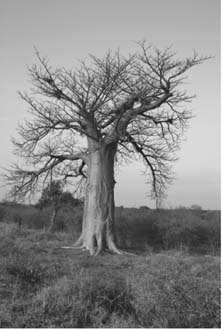
Figure 1 A baobab tree in the northern region of Limpopo Province, South Africa. In Africa, the baobab tree features largely in fertility rites and ancestor respect rituals.
Further Readings
...
- Ancestral Figures
- Communalism and Family
- Concepts and Ideas
- Deities and Divinities
- Abasi
- Agwe
- Aida Wedo
- Aiwel
- Akamba
- Amen
- Anubis
- Anukis
- Apep
- Apis
- Asase Yaa
- Aten
- Atum
- Ausar
- Auset
- Azaka, the Loa
- Bes
- Bondye
- Chi
- Danbala Wedo
- Divinities
- Eleda
- Eniyan
- Ennead
- Esu, Elegba
- Ezili Dantò
- Ezili Freda
- Faro
- God
- Goddesses
- Hapi
- Hathor
- Heru, Horus
- Ibis, Symbol of Tehuti
- Jok (Acholi)
- Khnum
- Khonsu
- Mami Wata
- Mawu-Lisa
- Min
- Montu
- Nana Buluku
- Ngai
- Ngewo
- Nkulunkulu
- Nyame
- Nzambi
- Obatala
- Oduduwa
- Ogdoad
- Ogun
- Olodumare
- Olokun
- Olorun
- Orisha Nla
- Orunmila
- Oshun
- Oya
- Ptah
- Ra
- Ruhanga
- Sekhmet
- Serapis
- Seshat
- Set
- Shango
- Shu
- Songo
- Sopdu
- Tefnut
- Thoth
- Tibonanj
- Wepwawet
- Woyengi
- Yao
- Yemonja
- Zin
- Eternality
- Nature
- Personalities and Characters
- Possessors of Divine Energy
- Rituals and Ceremonies
- Adae
- Agricultural Rites
- Ceremonies
- Circumcision
- Clitorectomy
- Dance and Song
- Desounen
- Harvest
- Incense
- Initiation
- Invocations
- Lele
- Medicine
- Medicine Men and Women
- Mediums
- Mummification
- Music
- Naming
- Offering
- Ohum Festival
- Opening of the Mouth Ceremony
- Puberty
- Purification
- Rain Dance
- Rites of Passage
- Rites of Reclamation
- Rituals
- Seclusion
- Shawabti
- Shrines
- Societies of Secrets
- Yam
- Yanvalou
- Sacred Spaces and Objects
- Akhenaten
- Altars
- Amulet
- Asamando
- Bata Drums
- Boats
- Bois Caiman
- Cowrie Shells
- Crossroads
- Drum, The
- Flag and Flag Planting
- Govi
- Groves, Sacred
- Ikin
- Ilé-Ifè
- Incense
- Kisalian Graves
- Lakes
- Maroon Communities
- Mount Cameroon
- Mount Kenya
- Mountains and Hills
- Oumfò
- Potomitan
- Pyramids
- Rivers and Streams
- Rocks and Stones
- Sarcophagus
- Sphinx
- Totem
- Vilokan
- Waset
- Societies
- Symbols, Signs, and Sounds
- Taboo and Ethics
- Texts
- Traditions
- Akan
- Asante
- Azande
- Baga
- Baganda
- Bakongo
- Bakota
- Balanta
- Balengue
- Baluba
- Bamana
- Bamileke
- Bamun
- Banyankore
- Banyarwanda
- Bariba
- Barotse
- Bassa
- Basuto
- Batonga
- Bete
- Bobo
- Candomblé
- Chagga
- Chewa
- Chokwe
- Convince
- Dagu
- Dinka
- Diola
- Dioula
- Dogon
- Duala
- Efik
- Ekoi
- Ewe
- Fang
- Fon
- Fula (Fulbe)
- Ga
- Gamo Religion
- Gola
- Gurunsi
- Haya
- Hoodoo
- Hutu
- Ibibio
- Idoma
- Igbo
- Jola
- Kabre of Togo
- KalÛnga
- Kirdi
- Kumina
- Lobi
- Lomwe
- Lovedu
- Lugbara
- Luo
- Maasai
- Mende
- Mossi
- N'domo
- North America, African Religion in
- Nuer
- Obeah
- Okande
- Ovambo
- Palo
- Pedi
- Petwo
- Peul
- Rada
- Santeria
- Sara
- Saramacca
- Senufo
- Serer
- Shilluk
- Shona
- Songo
- Sotho
- Susu
- Swazi
- Tallensi
- Teke
- Tellem
- Temne
- Tiv
- Tsonga
- Tswana
- Tutsi
- Umbanda
- Vai
- Vodou and the Haitian Revolution
- Vodou in Benin
- Vodou in Haiti
- Vodunsi
- Wamala
- West African Religion
- Winti
- Wolof
- Xhosa
- Yao
- Yoruba
- Zarma
- Zulu
- Values
- Loading...
Get a 30 day FREE TRIAL
-
 Watch videos from a variety of sources bringing classroom topics to life
 -
Read modern, diverse business cases
-
Explore hundreds of books and reference titles

Read next

More like this
Sage Recommends
We found other relevant content for you on other Sage platforms.
Have you created a personal profile? Login or create a profile so that you can save clips, playlists and searches