
Entry
Entries A-Z
Subject index
Jazz
A fusion of several musical styles—including blues, ragtime, brass band music, and dance music—that was created and popularized by African American musicians. Where blues originated primarily in rural areas of the United States, jazz is an urban phenomenon that appeared in New Orleans in the late nineteenth and early twentieth centuries, influenced by the tradition of brass bands that were very popular in that city. Although jazz is based on the march rhythms of those bands, it is more complex and is characterized by improvisation in which artists depart from the printed music to create their own musical expressions.
Roots of Jazz
Historians trace the earliest roots of jazz to slave music of the pre–Civil War era that used techniques, such as improvisation and call-and-response (where the performer would call out a word or phrase and the audience would respond with another word or phrase), that were common to African music. This style of music was the forerunner of the blues, which appeared in the 1890s and contributed strongly to the development of jazz. Techniques such as the slurring and bending of notes, the use of falsetto wails, and vocal improvisation were common features of African American secular music of the time as well as of sacred music such as spirituals.
After the Civil War, professional black composers often used spirituals as the basis for their highly arranged secular musical pieces. In the late 1800s, the African American performers who pioneered black musical theater drew on earlier slave music and the works of black composers to create a new musical style that significantly influenced the development of jazz.
Another important precursor to classic jazz is ragtime, which originated in the midwestern United States (particularly Missouri) during the late 1800s and flourished from 1896 to 1917. Written mainly for the piano, ragtime was also based on march rhythms. While the pianist's left hand played a steady bass and chord pattern, the right hand played a melody with choppy, shortened notes, a technique called syncopation. Playing in this syncopated style was called “ragging,” which is probably the origin of the term ragtime.
The Jazz Age
Jazz became more widely known in the United States in 1917, largely due to the New York debut in January of that year of the Original Dixieland Jass (sic) Band. Although the members were white, they were imitating the music they had heard in New Orleans. The music caused a sensation, and the group received a great deal of publicity, even though there had been black bands in New Orleans as far back as 1908 that had toured the country.
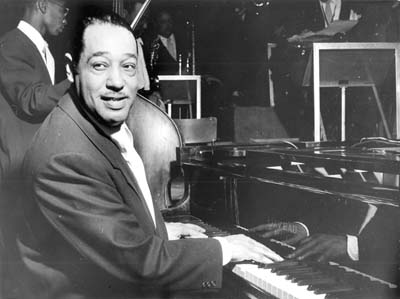
Jazz great Duke Ellington at the piano in Paris in 1950. The musical genre known as jazz owes a tremendous debt to the rich musical heritage of African Americans. A fusion of blues, ragtime, and other musical styles, it gained increasing popularity after the early 1900s, and it continues to thrill audiences throughout the United States and around the world. One of the biggest names in jazz is Duke Ellington, who toured nationally and internationally with his band for more than 50 years, from 1923 until his death in 1974. His jazz recordings continue to have a lasting effect upon audiences and younger jazz performers.
...
- Loading...
Get a 30 day FREE TRIAL
-
 Watch videos from a variety of sources bringing classroom topics to life
 -
Read modern, diverse business cases
-
Explore hundreds of books and reference titles

Read next

More like this
Sage Recommends
We found other relevant content for you on other Sage platforms.
Have you created a personal profile? Login or create a profile so that you can save clips, playlists and searches