

Responsible A.I.: Tackling Tech’s Largest Corporate Governance Challenges
Case
Teaching Notes
Supplementary Resources
Abstract
This case examines new governance challenges that artificial intelligence (AI) is posing. As AI is increasingly developed and used by companies globally, leading tech companies—including Google—have or are developing responsible AI principles to help guide ethical decisions in developing, managing, and using AI. Principles can inform new strategies or initiatives, while impacting employee behavior. While companies have slightly different principles for responsible AI depending on their context and industry, there are similarities—including fairness and justice found across different principles. In 2017, Google’s CEO—Sundar Pichai—announced that Google would be an “AI first” company and shortly after prioritized the development of an ethical charter to guide the company when it came to AI. The company has made much progress including adopting responsible AI principles. However, the company—and its industry peers—continue to face challenges related to operationalizing the AI Principles. This case delves into the promise and rapid growth of AI, how companies have responded, and challenges to responsible AI development and management. It specifically explores how Google has addressed responsible AI innovation, including the launch of its AI Principles, structures created to bring those principles to life, and the role of grassroots leadership at the company. Finally, it explores a real challenge Google faces in operationalizing its AI Principles. By exploring the landscape of responsible AI and delving into challenges faced at Google, students can consider how to grapple with responsible innovation challenges and approaches to apply their own leadership on this timely issue.
This case study is provided in this Sage Business collection primarily as a basis for classroom discussion or self-study and is not meant to illustrate either effective or ineffective management styles. Nothing herein shall be deemed to be an endorsement of any kind. This case study is for scholarly, educational, or personal use only within your university, and cannot be forwarded outside the university or used for other commercial purposes.
© 2026 Sage Publications, Inc. All Rights Reserved.
Resources
Appendix A
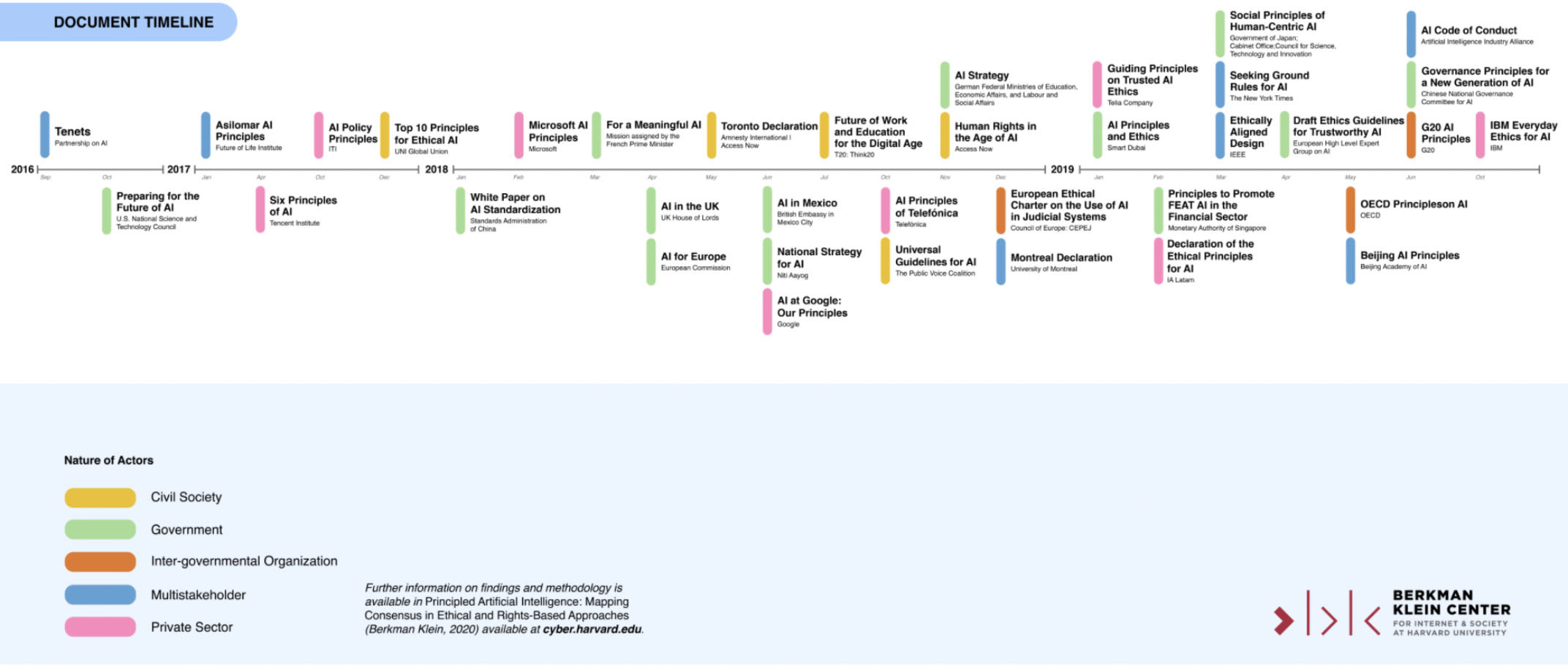
Exhibit 1 Principled Artificial Intelligence: A Map of Ethical & Rights-Based Approaches to Principles for AI.
The events depicted in the timeline are as follows.
Sep 2016: Tenets: Partnership on A I.
Oct 2016: Preparing for the future of A I. U. S. National Science and Technology Council.
Jan 2017: Asilomar A L Principles. Future of Life Institute.
Apr 2017: Six Principles of A I. Tencent Institute.
Oct 2017: A I Policy principles.
Dec 2017: Top 10 principles for ethical A I. U N I Global Union.
Jan 2018: White Paper on A I Standardization. Standardization administration of China.
Feb 2018: Microsoft A I principles. Microsoft.
Mar 2018: For a meaningful A I. Mission assigned by the French Prime Minister.
Apr 2018: A I in the U K. UK House of Lords. A I for Europe. European Commission.
May 2018: Toronto Declaration. Amnesty International. Access Now.
Jun 2018: A I in Mexico. British Embassy in Mexico city. National Strategy for A I. Niti Ayog. A I at Google:
Our Principles. Google.
Jul 2018: Future of work and Education for the Digital age. T 20: Think 20.
Oct 2018: A I Principles of Telefonics. Telefonica. Universal guidelines for A I. The public voice coalition.
Nov 2018: A I strategy. German Federal Ministries of Education, economics affairs, and Labour and Social
affairs. Human rights in the age of A I. Access now.
Dec 2018: European ethical charter on the sue of A I in judicial systems. Council of Europe. C E P E J.
Montreal Declaration. University of Montreal.
Jan 2019: Guiding Principles on Trusted A I ethics. Telia company. A I principles and ethics. Smart Dubai.
Feb 2019: Principles to promote FEAT A I in the financial sector. Monetary authority of Singapore. Declaration
of the ethical principles for A I. IA LATAM.
Mar 2019: Ethically aligned design. I E E E. Seeking ground rules for A I. The New York Times. Social
Principles of Human-Centric A I. Government of Japan; Cabinet office. Council for Science Technology and
Innovation.
Apr 2019: Draft ethics guidelines for trustworthy A I. European high level expert group on A I.
May 2019: O E C D Principles on A I. O E C D. Beijing A I Principles. Beijing Academy of A I.
Jan 2019: G 20 A I Principles. G 20. Governance Principles for a New Generation of A I. Chinese National
Governance Committee for A I. A I Code of conduct. Artificial intelligence industry alliance. I B M everyday
ethics for A I. I B M.
Nature of Actors:
Civil society
Government
Inter-governmental organization
Multi-stakeholder
Private Sector
Further information on findings and methodology is available in Principal Artificial Intelligence: Mapping
Consensus in Ethical and Rights-Based approaches. (Berkman Klein, 2020) available at cyber.harvard.edu.
Source:Berkman Klein Center.
Exhibit 2 Selection of Key Milestones of Google’s Work on Responsible AI.
- 2016 | Google Cloud declines to include facial recognition in its API offerings due to outstanding ethics and fairness questions.
- May 2017 | CEO Sundar Pichai outlines Google’s vision as an AI-first company at the 2017 Google I/O.
- 2018 | Google announces facial recognition won’t be made publicly available.
- June 2018 | Google publicly launches their AI Principles, its ethical charter of seven AI aspirations and four AI applications it will not pursue.
- September / October 2018 | The Responsible Innovation team is founded and formalized.
- March 2019 | Google announces its Advanced Technology External Advisory Council (ATEAC), a committee meant to provide external and expert advice on ethical development of new AI technologies (dissolved soon after).
- 2020 | Responsible Innovation launches the quarterly Equitable AI Research Roundtables (EARR), focused on the potential downstream harms of AI with experts from the Othering and Belonging Institute at UC Berkeley, PolicyLink, and Emory University School of Law.
- 2021 | Through the Award for Inclusion Research Program, Google Research funds 34 faculty who are conducting research in areas like accessibility, algorithmic fairness, higher education and collaboration, and participatory ML.
- 2021 | Google adds sessions focused on responsible innovation topics – including ethics in ML, applying AI principles, algorithmic unfairness, and bias in technology – into two of Google’s classroom programs for Historically Black Colleges and Universities (HBCU), Google In Residence (GIR) and TechExchange.1,2
Source: Google.
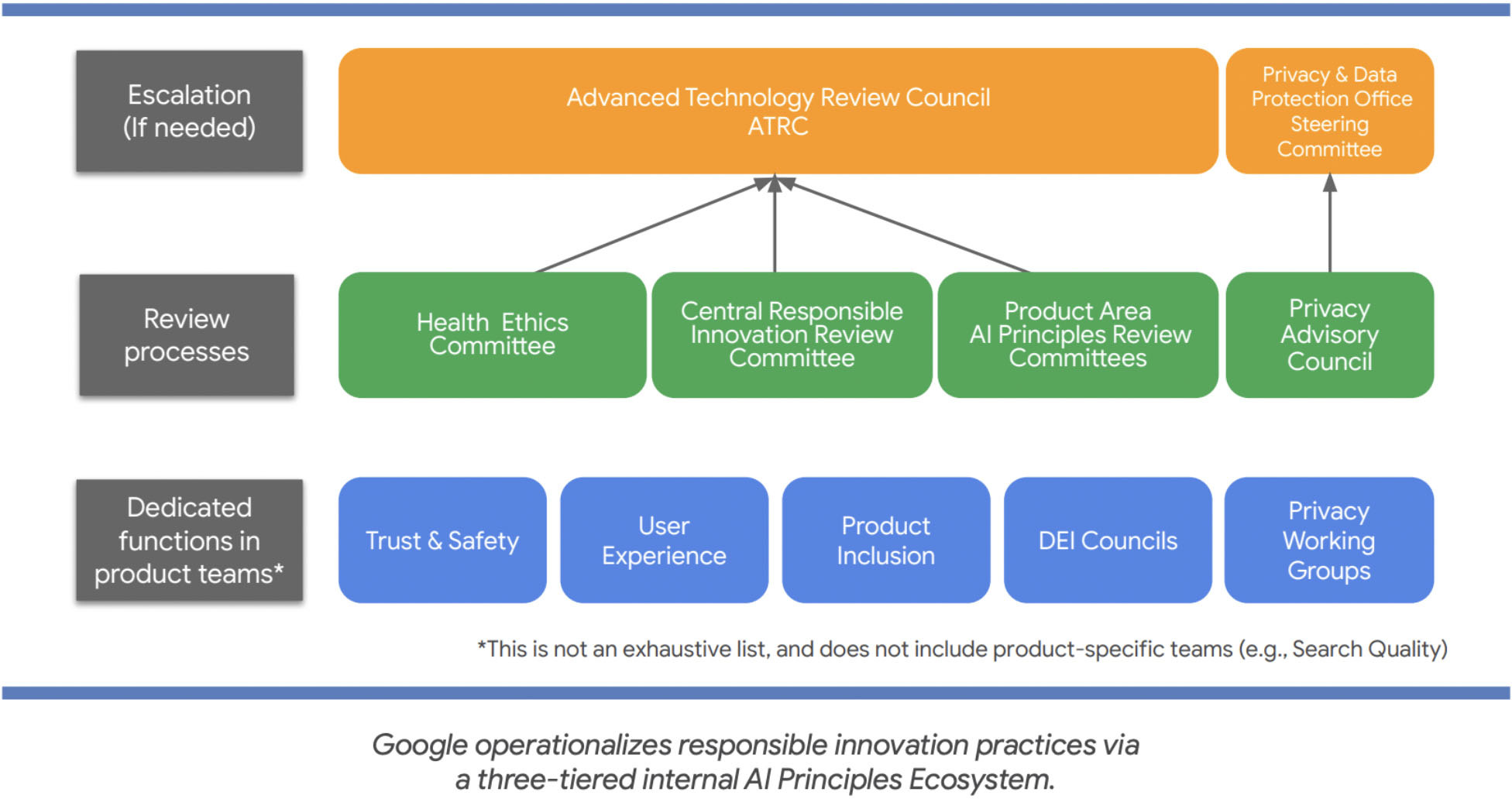
Exhibit 3 Google’s Three-Tiered Internal AI Principles Ecosystem.
The illustration comprises three rows.
Row 1: From left to right, six rectangular boxes are labeled as follows. Escalation (if needed), Advanced
Technology Review Council (A T R C), Privacy and Data Protection Office Steering
Committee.
Row 2: From left to right, five rectangular boxes are labeled as follows. Review Process,
Health Ethics committee, Central responsible innovation review committee, Product area A I principles review Committees. Privacy Advisory Council.
Row 3: From left to right, six rectangular boxes are labeled as follows. Dedicated functions in product teams followed by asterisk mark. Trust and safety, User experience, Product inclusion,
D E I Councils, Privacy working groups.
Three upward arrows are indicated from Health ethics Committee, Central responsible
innovation review committee, Product area A I principles review committees toward A T R C. An upward arrow is indicated from Privacy Advisory Council toward Privacy and Data protection Office Steering Committee.
Asterisk Mark indicates this is not an exhaustive list, and does not include product-specific teams (example Search Quality)
A note reads Google operationalizes responsible innovation practices via a three-tiered
internal A I principles ecosystem.
Source:Google.
Exhibit 4. Non-exhaustive Sampling of Questions Identified by the Google Cloud Review for Credit Lending Assessment.
Product Description and Use Case
- What is the intended use, limitations, user journey, go-to-market plans, and product vision for the credit lending solution? What problems will the machine learning model solve?
- What happens before and after the model in a customer’s end to end workflow?
- Are there uses of this solution that (1) we don’t intend, (2) can foresee if the product is made generally available, and (3) would be considered problematic?
Stakeholders
- Who are the intended users? What other groups may be impacted? What groups are invisible today? Who benefits from the status quo? Who does not?
- Do we have input, first-hand or documented, from stakeholders to ensure their voices are incorporated into our evaluation?
Societal Context
- What are the historical and contemporary social, political, economic, emotional, and attitudinal factors important and relevant to credit lending and the FinServ industry?
- Is there potential to perpetuate or exacerbate exclusion in FinServ with automation?
- As the technology provider, what is Google’s scope of responsibility to address potential risks and harms identified across the credit lending industry? Where do we have direct control of the product, and where can we influence or educate stakeholders in control to make informed decisions?
Data, Testing, Tooling
- How might we define fairness and equity with a credit lending solution?
- How was the training data collected, sampled, and labeled?
- How was the model tested and validated? What are plans or recommendations to customers for ongoing testing and monitoring in deployment?
Solution Design
- Are there technical criteria critical to developing a credit solution responsibly?
Opportunities
- Are there opportunities with a credit lending AI solution to reduce exclusionary practices in FinServ today?
- Are there external experts or parties in this space we would consider partnering with? To what benefit?
- What educational materials are important to provide customers to help ensure the responsible and intended use of the solution?
Source: Google.
Notes
1. 1. (2022). Google research: Themes from 2021 and beyond. Google AI Blog. Retrieved from https://ai.googleblog.com/2022/01/google-research-themes-from-2021-and.html
2. 2. (2021). 2021 AI Principles progress update. Google. Retrieved from https://ai.google/static/documents/ai-principles-2021-progress-update.pdf.
This case study is provided in this Sage Business collection primarily as a basis for classroom discussion or self-study and is not meant to illustrate either effective or ineffective management styles. Nothing herein shall be deemed to be an endorsement of any kind. This case study is for scholarly, educational, or personal use only within your university, and cannot be forwarded outside the university or used for other commercial purposes.
© 2026 Sage Publications, Inc. All Rights Reserved.
Get a 30 day FREE TRIAL
-
 Watch videos from a variety of sources bringing classroom topics to life
 -
Read modern, diverse business cases
-
Explore hundreds of books and reference titles

Read next

More like this
Sage Recommends
We found other relevant content for you on other Sage platforms.
Have you created a personal profile? Login or create a profile so that you can save clips, playlists and searches