

Going Greener and Smarter: The Energy Transition at the Port of Rotterdam’s Industrial Complex
Case
Teaching Notes
Supplementary Resources
Abstract
This case looks at the challenges facing the Port of Rotterdam in the Netherlands in its transition towards becoming a sustainable and smart port. More specifically, it examines how smart energy grids and business applications (apps) could facilitate this shift. As the Port’s operations were mainly in CO2-and energy-intensive sectors, it had to find ways to reduce its greenhouse emissions and comply with the Paris Climate Agreement. Although the Port of Rotterdam and its industrial cluster had already taken steps in this direction, for example via a residual heat network and a hydrogen project, it still needed to investigate new ways to establish an efficient system of using energy and raw materials so that its existing activities would have a future and the industrial complex would remain a vibrant economic hub.
This case study is provided in this Sage Business collection primarily as a basis for classroom discussion or self-study and is not meant to illustrate either effective or ineffective management styles. Nothing herein shall be deemed to be an endorsement of any kind. This case study is for scholarly, educational, or personal use only within your university, and cannot be forwarded outside the university or used for other commercial purposes.
© 2026 Sage Publications, Inc. All Rights Reserved.
Resources
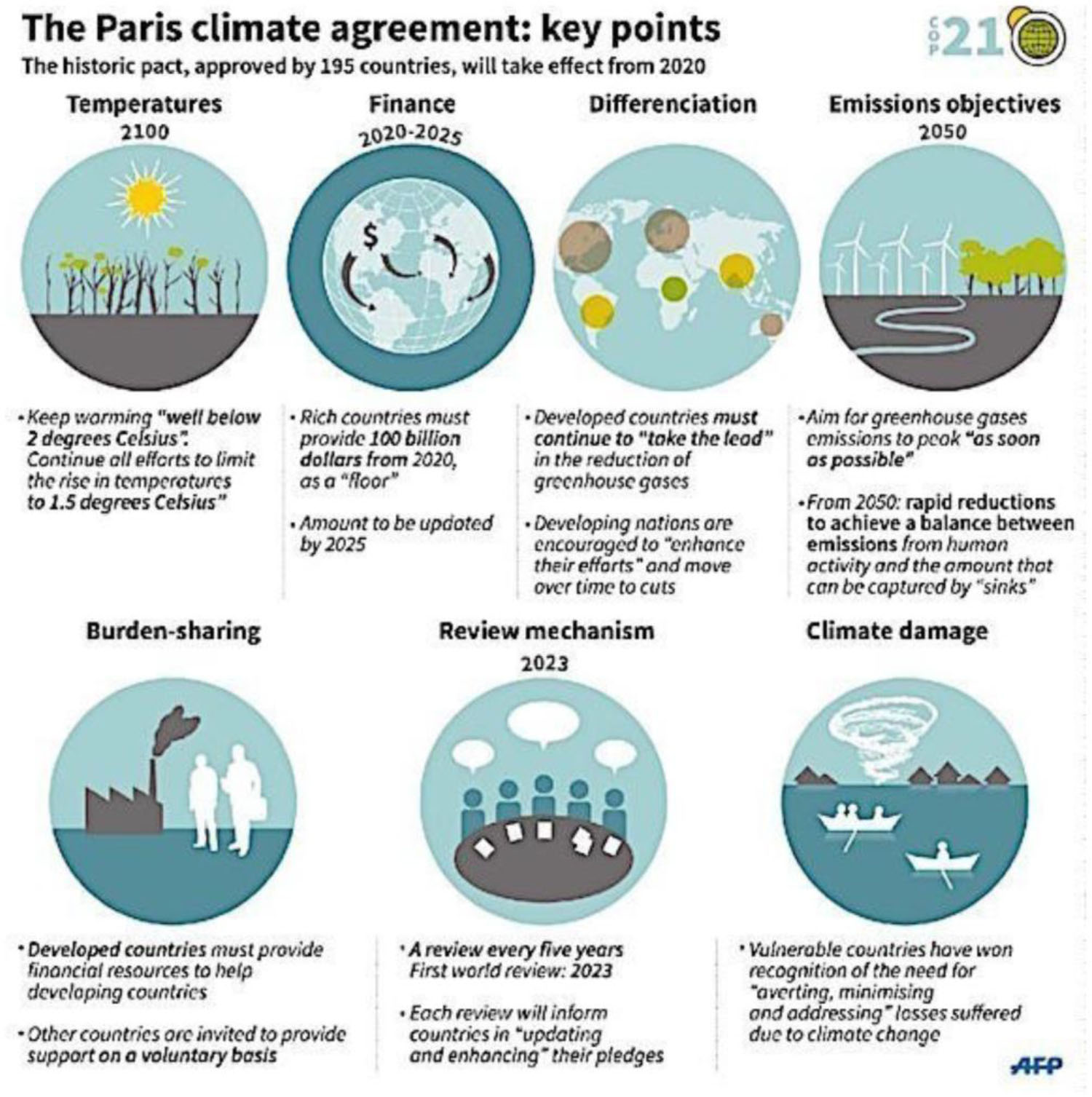
The historic pact approved by 195 countries in COP21 will take effect from 2020.
Under temperatures, by 2100, keep warming well below 2 degree Celsius; continue all efforts to limit the rise in temperatures to 1.5 degrees Celsius.
Under finance, from 2020 to 2025, rich countries must provide 100 billion dollars from 2020 as a floor with the amount to be updated in 2025.
Under differentiation, developed countries must continue to take the lead in the reduction of greenhouse gases and developing nations are encouraged to enhance their efforts and move over time to cuts.
Under emissions objectives, by 2050, aim for greenhouse gases emissions to peak as soon as possible; from 2050, rapid reductions to achieve a balance between emissions from human activity and the amount that can be captured by sinks.
Under burden-sharing, developed countries must provide financial resources to help developing countries; other countries are invited to provide support on a voluntary basis.
Under review mechanism by 2023, a review every five years with the first world review in 2023; each review will inform countries in updating and enhancing their pledges.
Under climate change, vulnerable countries have won recognition of the need for averting, minimizing, and addressing losses suffered due to climate change.
Appendix A: The Paris Climate Agreement
Source: World Economic Forum
https://www.weforum.org/agenda/2016/11/5-charts-that-explain-the-paris-climate-agreement/
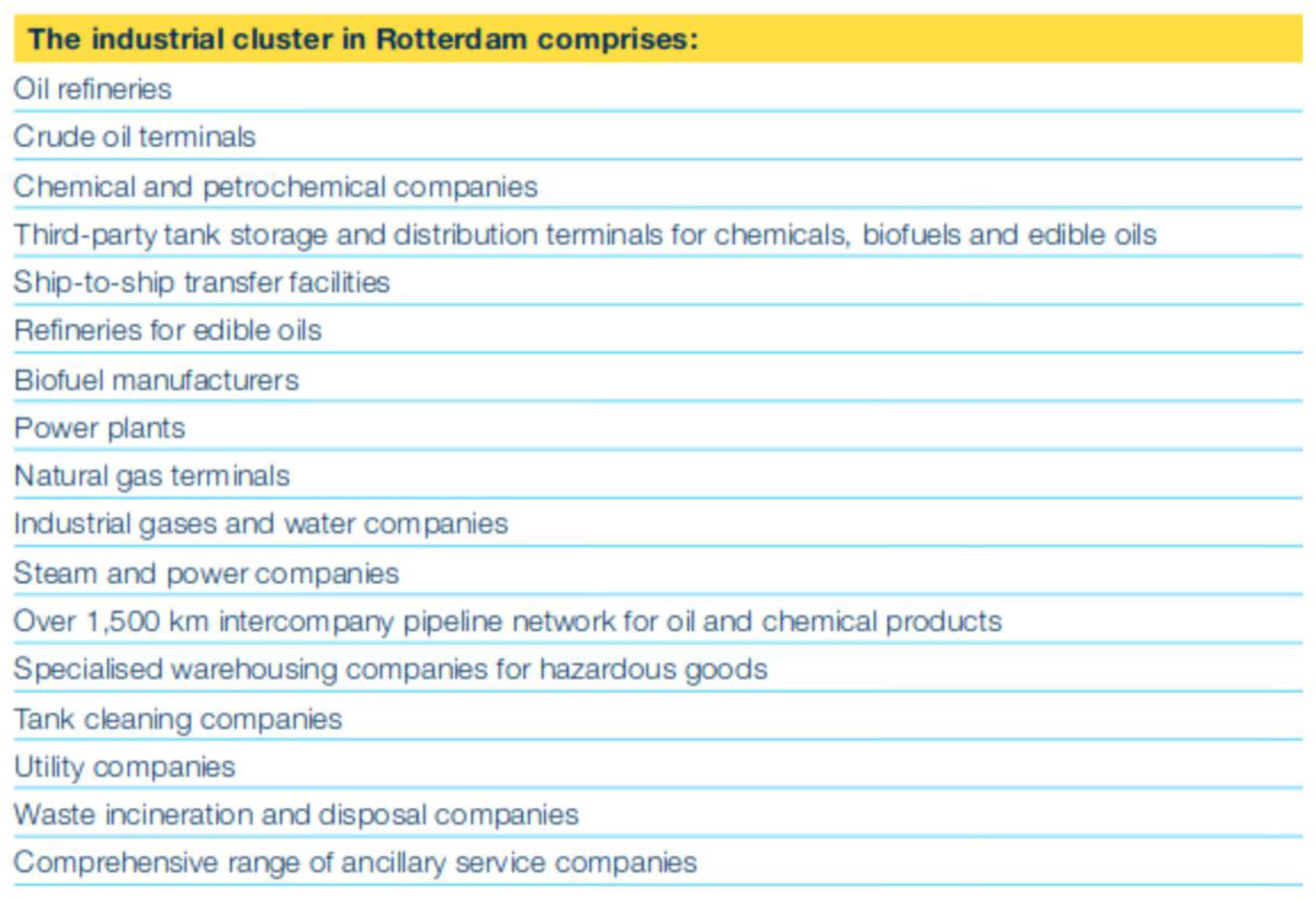
oil refineries; crude oil terminals; chemical and petrochemical companies; third-party tank storage and distribution terminals for chemicals, biofuels and edible oils; ship-to-ship transfer facilities; refineries for edible oils; biofuel manufacturers; power plants; natural gas terminals, industrial gases and water companies; steam and power companies; over 1500 kilometers intercompany pipeline network for oil and chemical products; specialized warehousing companies for hazardous goods; tank cleaning companies; utility companies; waste incineration and disposal companies; and comprehensive range of ancillary service companies.
Appendix B: Companies in the Rotterdam Energy Industrial Cluster
Source: Port of Rotterdam
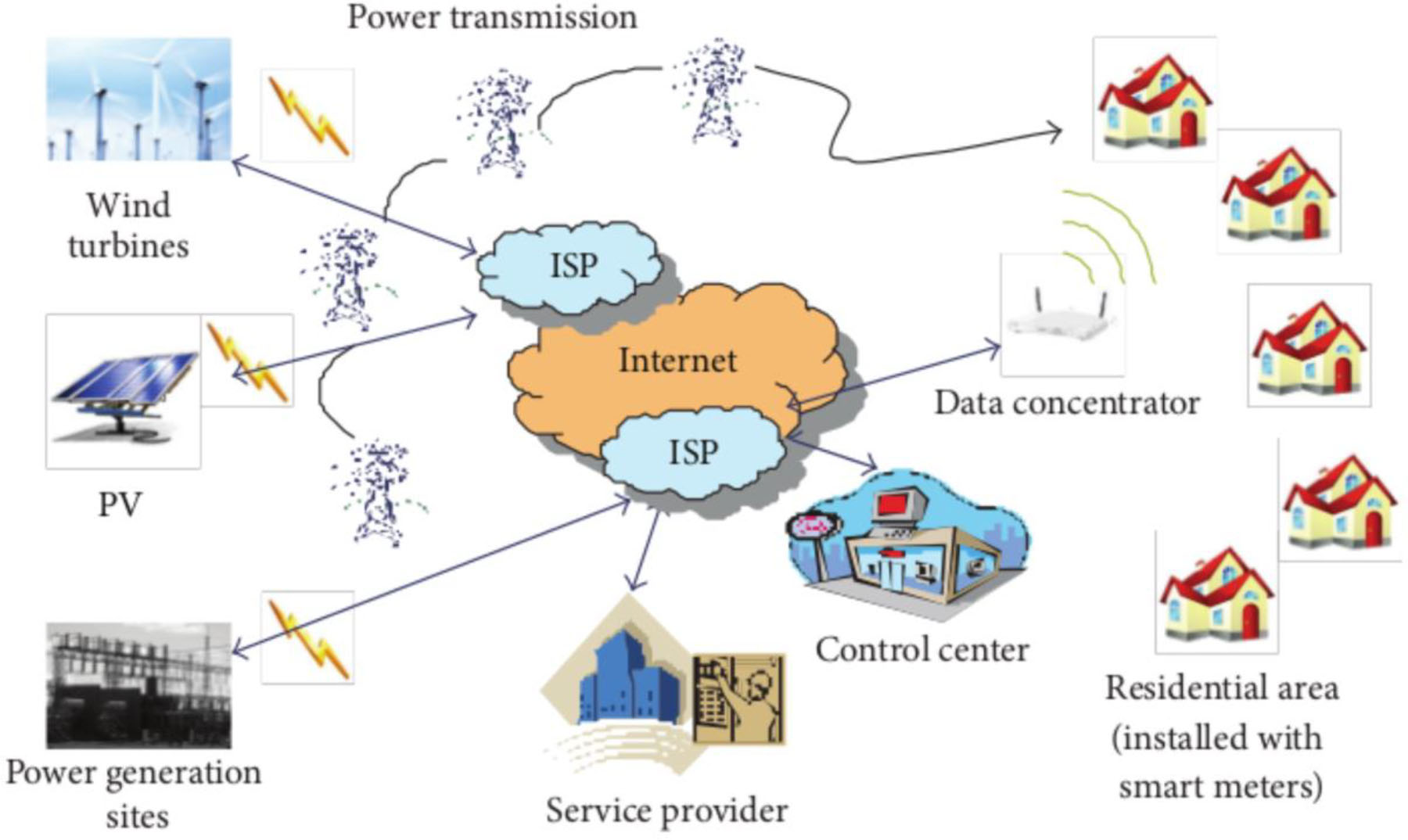
The ISP of the internet is connected to the data concentrator in a residential area installed with smart meters, control center, service provider, power generation sites, PV, and wind turbines. Power transmission occurs at power generation sites, PV, and wind turbines and finally to the residential area.
Appendix C: An Example of Communication Architecture in a Smart Grid
Source: Bari, A., Jiang, J., Saad, W., et al. (2014). Challenges in the smart grid applications: an overview.
References
Endnotes
1Highlights Annual Report 2019. https://www.portofrotterdam.com/en/port-authority/about-the-port-authority/finance/annual-reports
2Highlights Annual Report 2018. https://www.portofrotterdam.com/en/port-authority/about-the-port-authority/finance/annual-reports
3https://www.portofrotterdam.com/en/port-authority/about-the-port-authority/organisation/organisation
4Van Cappellen, L., Croezen, H., Rooijers, F. (July 2018). Feasibility study into blue hydrogen. Technical, economic & sustainability analysis. Delft. CE Delft. Retrieved from: https://www.cedelft.eu/en
5More on the Port of Rotterdam’s Hydrogen Vision (May 2020). https://www.portofrotterdam.com/sites/default/files/hydrogen-vision-port-of-rotterdam-authority-may-2020.pdf?token=XHpe4PNr
6https://www.euroheat.org/news/main-infrastructure-south-holland-heat-network-gaining-shape-leiden-region/
7Facts and Figures 2019. https://www.portofrotterdam.com/en/our-port/facts-figures-about-the-port
11Ibid.
14https://www.portstrategy.com/news101/port-operations/planning-and-design/rotterdam-climate-initiative2
15Bari, A., Jiang, J., Saad, W., et al. (2014). Challenges in the smart grid applications: an overview. International Journal of Distributed Sensor Networks. https://doi.org/10.1155/2014/974682
16United Nations Economic Commission for Europe. (2015). Electricity System Development: A Focus On Smart Grid. Overview of Activities And Players In Smart Grids. Retrieved from https://www.unece.org/fileadmin/DAM/energy/se/pdfs/eneff/eneff_h.news/Smart.Grids.Overview.pdf
18Cassiani, C., Candelo-Becerra, J, & Hoyos Velasco, F. (2020). Electricity market strategies applied to microgrid development. International Journal of Power Electronics and Drive Systems (IJPEDS). http://doi.org/10.11591/ijpeds.v11.i1. pp 530-546
19Cassiani, C., Candelo-Becerra, J., & Hoyos Velasco, F. (2020). Electricity market strategies applied to microgrid development. International Journal of Power Electronics and Drive Systems (IJPEDS). http://doi.org/10.11591/ijpeds.v11.i1. pp 530-546
This case study is provided in this Sage Business collection primarily as a basis for classroom discussion or self-study and is not meant to illustrate either effective or ineffective management styles. Nothing herein shall be deemed to be an endorsement of any kind. This case study is for scholarly, educational, or personal use only within your university, and cannot be forwarded outside the university or used for other commercial purposes.
© 2026 Sage Publications, Inc. All Rights Reserved.
Get a 30 day FREE TRIAL
-
 Watch videos from a variety of sources bringing classroom topics to life
 -
Read modern, diverse business cases
-
Explore hundreds of books and reference titles

Read next

More like this
Sage Recommends
We found other relevant content for you on other Sage platforms.
Have you created a personal profile? Login or create a profile so that you can save clips, playlists and searches