

Easy Flower: Flowers Meet Business and Technology
Case
Teaching Notes
Supplementary Resources
Abstract
In less than four years, Easy Flower (EF) grew from an e-commerce flower retail start-up to China’s largest supply chain operator in fresh flowers. Easy Flower positioned itself as a provider of quality flowers to retail florists. Taking advantage of its strength in technology talent, and pooling its finances, the company successfully created a national distribution infrastructure network, disrupting and transforming the fractured supply chain system of China’s flower industry and dramatically enhancing its supply chain efficiency. Having built an industry leader from scratch, founder Rong Chao had to think about Easy Flower’s future strategy. In late 2018, he saw two options: further integrating the flower value chain in China, or internationalizing his business by exporting components of his technology and systems to flower platforms in other countries. Constrained by the company’s resources, he had to assess the various risks and requirements that each direction would entail.
This case was prepared for inclusion in Sage Business Cases primarily as a basis for classroom discussion or self-study, and is not meant to illustrate either effective or ineffective management styles. Nothing herein shall be deemed to be an endorsement of any kind. This case is for scholarly, educational, or personal use only within your university, and cannot be forwarded outside the university or used for other commercial purposes.
2026 Sage Publications, Inc. All Rights Reserved
Resources
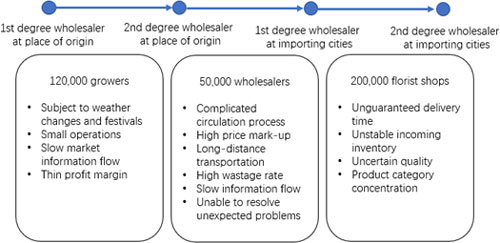
Exhibit 1: Traditional Flower Supply Chain in China
The four stages in this supply chain are represented by four circles with arrows from one circle to the next. These circles from left to right read:
Circle 1: 1st degree wholesaler at place of origin.
Circle 2: 2nd degree wholesaler at place of origin.
Circle 3: 1st degree wholesaler at importing cities.
Circle 4: 2nd degree wholesaler at importing cities.
Three boxes with text are also seen under each of the arrows. The box under the first arrow from circle 1 to circle 2 reads:
120,000 growers
- Subject to weather changes and festivals.
- Small operations.
- Slow market information flow.
- Thin profit margin.
The box under the second arrow from circle 2 to circle 3 reads:
50,000 wholesalers
- Complicated circulation process.
- High price mark-up.
- Long-distance transportation.
- High wastage rate.
- Slow information flow.
- Unable to resolve unexpected problems.
The box under the third arrow from circle 3 to circle 4 reads:
200,000 florist shops
- Unguaranteed delivery time.
- Unstable incoming inventory.
- Uncertain quality.
- Product category concentration.
Source: Easy Flower, recreated by authors.
Exhibit 2: Domestic Competitors and Their Business Models
| Company Name | Market Segments | Business Model |
| Reflower.com.cn | household | 2C |
| FlowerPlus | household | 2C |
| Hua.com | household, gift | 2C |
| 24Tidy | household | 2C |
| TheBeastShop.com | gift | 2C |
| Roseonly | gift | 2C |
| Huaji.com | gift, e-commerce platform | 2C, 2B |
| Flower Bus | e-commerce platform | 2B |
| Easy Flower | household, gift, e-commerce platform | 2B, 2C |
Note: 2C = to customers; 2B = to business.
Source: Easy Flower, compiled by authors.
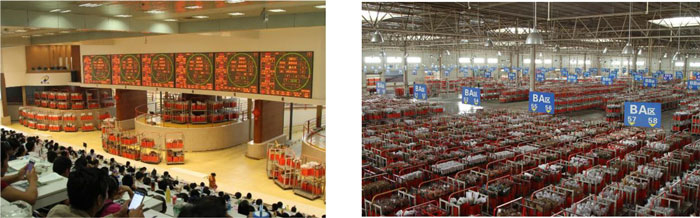
Exhibit 3: Kunming International Flora Auction Trading Center (KIFA)
Each of the three circular tables on stage have stands on then identical to the ones in front of them, with the same bright-colored objects arranged on them. Each stand has two racks. Six large monitors are seen above the stage on the wall.
Source: “About KIFA,” KIFA, accessed March 25, 2019, www.kifa.net.cn/aboutKIFA.do?method=show&contentId=1.
Exhibit 4: Reflower
Reflower was founded by senior journalist Zhu Yueyi in 2015 as a retail flower e-commerce brand. Zhu’s prior entrepreneurial experience before Reflower was in cofounding Yongche.com, an online car-hailing service, and acting as its chief marketing officer. Reflower was dedicated to promoting flowers not as an expensive gift but as part of people’s daily consumption. The company offered monthly subscriptions and weekly delivery service. Users could not order specific species à la carte but had to wait to be surprised by the seasonal flowers chosen by the company. Its operational model involved signing with the top 30% of flower growers, conducting contract farming, and introducing new species to growers. It started to adopt the SF Express cold chain in 2016.
Source: “500 Million Stems Sold in 3 Years, Valuation at RMB 2 Billion, Reflower’s 10,000-Word Entrepreneurial Notes,” Chinaz.com, June 7, 2018, accessed January 28, 2019, www.chinaz.com/start/2018/0608/899777.shtml
Exhibit 5: Rose Grading Example
| | Carola Rose | | ||||||||
| Description | Overall requirement: Thick, long, straight stems, bright-colored buds, no mechanical injury or diseases | |||||||||
| Grade | Length (cm) | Stem Diameter (cm) | Bud Size | Curve | Packaging (Stems per Bundle) | |||||
| Upper layer (cm) | Lower layer (cm) | Number | Specifications | |||||||
| Diameter | Length | Total Length | Diameter | Length | ||||||
| A | ≥85 | 0.7–1.0 | ≥3.6 | 5 | 80 | ≥3.6 | 5 | ≤20° | 20 Stems per Bundle | 12 stems, 10 cm without thorns |
| B | ≥75 | 0.6–0.9 | ≥3.5 | 5 | 70 | ≥3.6 | 5 | 12 stems, 10 cm without thorns | ||
| C | ≥70 | 0.5–0.8 | ≥3.3 | 4.5 | 65 | ≥3.3 | 4.5 | 12 stems, 10 cm without thorns | ||
| D | ≥65 | 0.5–0.8 | ≥3.3 | 4.5 | 60 | ≥3.3 | 4.5 | 12 stems | ||
| E | ≥60 | 0.4–0.7 | ≥3.3 | 4.5 | 55 | ≥3.3 | 4.5 | 12 stems | ||
| Wedding | ≥35 | 0.4–0.6 | ≥3.3 | 4 | 30 | ≥3.3 | 4 | / | 12 stems | |


Source: Easy Flower.
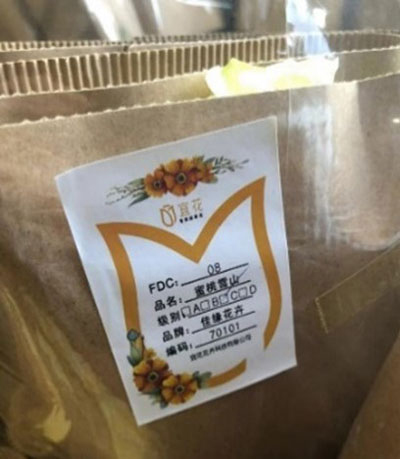
Exhibit 6: Packaged Flowers
| | Label Information: FDC (Front Distribution Center): 08 Species: Peach Avalanche+ Grade: B Supplier Brand: Jia Yuan Flowers Code: 70101 |
Source: Easy Flower.
Exhibit 7: Easy Flower’s Three-Layer Distribution System
The diagram has three boxes each on either side of a circle labeled NDC. An arrow from each of the three boxes labeled FDC1, FDC 2, and FDC 3, respectively, from top to bottom on the left, point to the NDC circle on the right. Three arrows from the NDC circle point from the circle to each of boxes labeled RDC 1, RDC 2, and RDC 3, respectively, from top to bottom on the right. Each of the three boxes on the right have three arrows from them that point to the space on the right.
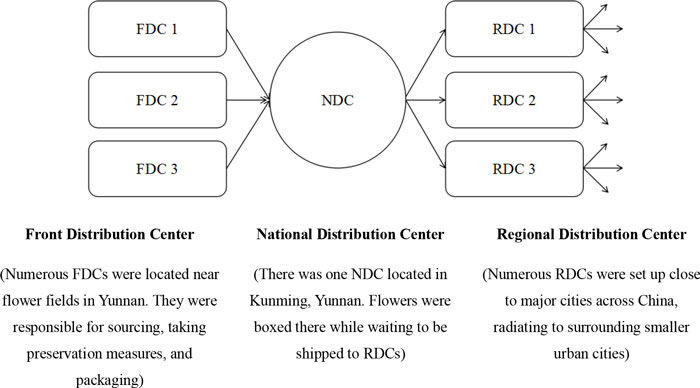
| Front Distribution Center (Numerous FDCs were located near flower fields in Yunnan. They were responsible for sourcing, taking preservation measures, and packaging) | National Distribution Center (There was one NDC located in Kunming, Yunnan. Flowers were boxed there while waiting to be shipped to RDCs) | Regional Distribution Center (Numerous RDCs were set up close to major cities across China, radiating to surrounding smaller urban cities) |
Source: Easy Flower.
Exhibit 8: Geographic Distribution of Growers, Suppliers and Customers, and National Logistics Flow
This map shows that the growers are located in the Kunming prefecture and the right half of the Central part of the Yunnan province.
Growers (mainly in Yunnan Province)
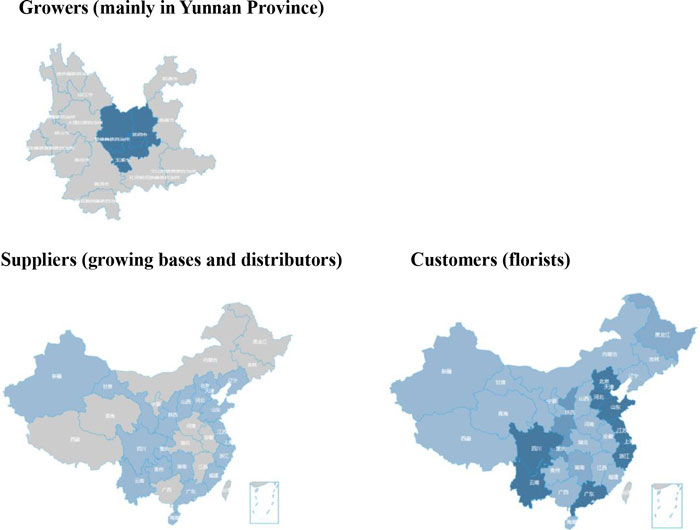
This map of China shows that suppliers are located in all except the Tibet, Qinghai, Guangxi, Henan, Jiangxi, Hubei, Anhui, Inner Mongolia, Heilongjiang, and Jilin provinces of China.
Suppliers (growing bases and distributors)
Customers (florists)
Source: Easy Flower.
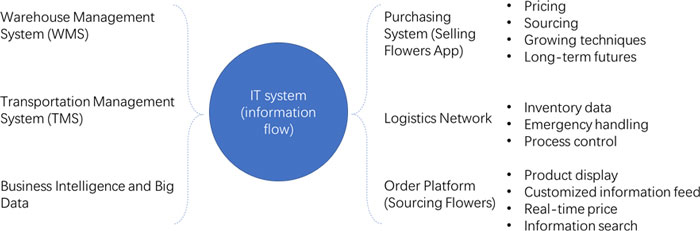
Exhibit 9: Easy Flower’s Information Systems
Three systems represented as three rows on the left read, Warehouse Management System (WMS), Transport Management System (TMS), and Business intelligence and big data, that are vertically aligned on the left. Parenthesis from these rows points to a bright circle in the middle, labeled IT system (Information flow). Parenthesis from three rows on the right also points to this circle. The three rows read, Purchasing System (Selling Flowers App), Logistics Network, and Order Platform (Sourcing flowers), from top to bottom.
The bullet points to the right of the Purchasing System (Selling Flowers App) reads:
- Pricing
- Sourcing
- Growing techniques
- Long-term futures
The bullet points to the right of the Logistics Network reads:
- Inventory data
- Emergency handling
- Process control
The bullet points to the right of the Order Platform (Sourcing flowers) reads:
- Product display
- Customized information feed
- Real-time price
- Information search.
Source: Easy Flower, recreated by authors.
Exhibit 10: Past Market Data and Future Forecast
| 2012–2016 Cut Flower Output and Revenue Data in Yunnan | |||||
|---|---|---|---|---|---|
| Year | 2012 | 2013 | 2014 | 2015 | 2016 |
| Output (billions of stems) | 7.25 | 8.05 | 8.37 | 8.69 | 10.06 |
| Revenue (billions of RMB) | 4.38 | 4.26 | 4.46 | 5.23 | 6.86 |
| Output growth rate (%) | 11 | 4 | 3.8 | 15.8 | |
| Revenue growth rate (%) | –2.7 | 4.7 | 17.3 | 31.2 | |
| 2013–2021 China’s Flower E-commerce Market and Growth | ||||||||
|---|---|---|---|---|---|---|---|---|
| Year | 2013 | 2014 | 2015 | 2016 | 2017 | 2018e | 2019e | 2020e |
| Market Size (in billions of RMB) | 1.2 | 1.9 | 3.4 | 7.4 | 12.4 | 18.2 | 26.1 | 36.5 |
| Growth Rate (%) | 58.68% | 79.17% | 114.24% | 68.39% | 46.74% | 43.16% | 40.12% | |
Source: iResearch data provided by Easy Flower.
Exhibit 11: International Competitors
| Company Name | Inception | Introduction |
| Royal FloraHolland, RFH | 1912, Netherlands | RFH was a cooperative comprised of over 4,500 growers, and was the world’s largest flower auction company. Every morning, RFH was able to sell over 20 million flowers and plants. The company’s revenue came from membership fees and transaction commissions. The gross transaction volume amounted to €4.6 billion in 2016 but the company’s revenue was less than 10% of the total amount. |
| Dutch Flower Group, DFG | 1999, Netherlands | DFG was a family business running 30 subsidiaries. The company focused on exporting flowers and plants to distributors and retail chains in 60 countries. The estimated sales in 2018 were €1.5 billion. |
| 1-800-Flowers | 1976, United States | The company dated back to 1976 and later transformed from offline to online operations as a flower e-commerce pioneer. The company utilized a complex algorithm to enhance supply-chain efficiency and the richness of its offerings. The supply chain contained non-flower gift suppliers, growers, logistics partners, fulfillment centers, and self-operated and franchised retail stores. The company was listed in the United States with a revenue of US$1.15 billion in 2018. |
| FTD Companies, Inc. | 1910 United States | FTD started as a cooperative of 13 florists who processed orders through telegraphs. The company ran an online retail business that sold flowers, jewelry, chocolate, and a variety of gifts. The company was listed in the United States and the 2017 revenue was US$1.08 billion. |
Source: “Royal FloraHolland,” Holland, accessed January 23, 2019, https://www.holland.com/global/tourism/destinations/provinces/north-holland/royal-floraholland-1.htm; “Royal FloraHolland: 12.5 Billion Flowers and Plants Traded in 2016,” Horticulture Connected, April 18, 2017, accessed January 28, 2019, http://horticultureconnected.co.uk/14762-royal-floraholland-12-5-billion-flowers-and-plants-traded-in-2016; “About Us,” Dutch Flower Group, accessed January 28, 2018, https://dfg.nl/en/about-us; P. Fraser Johnson and Ken Mark, “Royal FloraHolland: The Dutch Floriculture Supply Chain” (Canada: Ivey Publishing, June 27, 2016), 16; Jayashankar Swaminathan, “1-800-Flowers.com: Collaborating with Suppliers” (Canada: Ivey Publishing, March 6, 2017), 10; 1-800-Flowers.com, Inc., 2018 Annual Report, accessed January 28, 2019, https://investor.1800flowers.com/~/media/Files/O/One-800-Flowers/documents/annual-reports/flws-2018-annual-report.pdf; FTD, 2017 Annual Report, accessed January 28, 2019, http://investor.ftdcompanies.com/static-files/abbae776-7984-4591-a11b-26d8952e74a1.
This case was prepared for inclusion in Sage Business Cases primarily as a basis for classroom discussion or self-study, and is not meant to illustrate either effective or ineffective management styles. Nothing herein shall be deemed to be an endorsement of any kind. This case is for scholarly, educational, or personal use only within your university, and cannot be forwarded outside the university or used for other commercial purposes.
2026 Sage Publications, Inc. All Rights Reserved
Get a 30 day FREE TRIAL
-
 Watch videos from a variety of sources bringing classroom topics to life
 -
Read modern, diverse business cases
-
Explore hundreds of books and reference titles

Read next

More like this
Sage Recommends
We found other relevant content for you on other Sage platforms.
Have you created a personal profile? Login or create a profile so that you can save clips, playlists and searches