
Summary
Contents
Subject index
How do we encourage children to think deeply about the world in which they live? Research-based and highly practical, this book provides guidance on how to develop creative and critical thinking through your classroom teaching. Key coverage includes: • Classroom-ready ideas to stimulate high-order thinking • How to think critically and creatively across all areas of the curriculum • Case studies from primary, secondary and special schools • Philosophical approaches that give pupils the space to think and enquire This is essential reading for anyone on university-led and schools-based primary and secondary initial teacher education courses including undergraduate (BEd, BA QTS), postgraduate (PGCE, SCITT), School Direct, Teach First and employment-based routes and also anyone training to work in early years settings.
Appendix - Planning
1 Medium term planning for Thinking Maps in English (see Chapter 6)
Structure/Parts | Tips | Examples | Sentence and word level teaching points |
Headline | No more than 7 words | Pop Star’s Shoplifting Shame! Father Christmas Sees Red! | • Alliteration • Rhyme • Puns/play on words • Exclamation marks |
By-line | Writer’s name, title and location (if an international story) | Ivor Pen, weather correspondent, London | • Commas to separate items in a list |
Lead | 5 bare bums on a rugby post – no more than 3 sentences | Britain came to a standstill this morning as temperatures crashed to minus ten and snow covered the whole country | • Causal connectives • 3rd person narrative • Tenses may change |
Body | • Details about each of the Ws, some will be more important • Balanced (explain both sides) • Factual information • Short paragraphs • Emotive language (where appropriate) • Event-specific language | • Formal style | |
Sources | • Names, ages and/or titles of people who provided information • Use of direct and reported speech | • Direct speech – using inverted commas correctly • Reported speech Y4, 5, 6 | |
Illustration and caption | • No need to draw picture until publishing stage • Decide what the picture will be and write a caption underneath – short and snappy | ||
Thinking Maps which may be helpful in structuring writing or deconstructing exemplar texts: | |||
What happened? What is the sequence of events? What are the sub-stages?
| What are the causes and effects of this event?
| ||
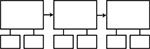
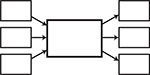
Source: Danescourt Primary School
2 Planning for Thinking Maps (see Chapter 6)
Pupils consider what options are available to them at 16 and 18. | Draw a flow chart of each age on the board with each of the options on there. | Pupils giving examples | |
Pupils reflect on their performance, the roles they fell into and the success of the task and team. | Split into small groups. Group task is to produce a bubble map for each age looking at the options, a brief description of what they are, the advantages of each and examples. They need to think about how to lay it out.
Each group member must contribute. Resources: Task 3 Notes, Careers Pilot website, laptops. Bubble maps. ALP: place in appropriate group Task 4: Two different work or study opportunities | 60 mins | Teacher observations Completion of bubble map Teacher observations Completion Tree Maps Teacher and pupil feedback |
Pupils start to look at specific pathways and how they can help with career progression. | Use ppt to guide pupils through this task
Select a few pupils to show what they have produced. Resources: Tree Maps and/or laptops ALN: Help given with choices and producing the tree map Task 5: Progression of a job role | Peer assessment on presentations at the end | |
Pupils take one specific job role or opportunity and look at how they can progress | Use ppt to guide pupils through this task.
Select a few pupils to show what they have produced. Resources: Flow Maps and/or laptops ALN: Help given with choice and producing the flow map. | 45 mins | Teacher observations Quality of pupils flow map Verbal feedback after the activity |
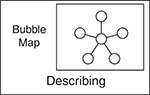
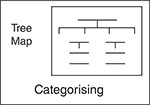
Source: Castle School
3 Lesson Plan for ‘BeanBag Pickup’ (see Chapter 9)
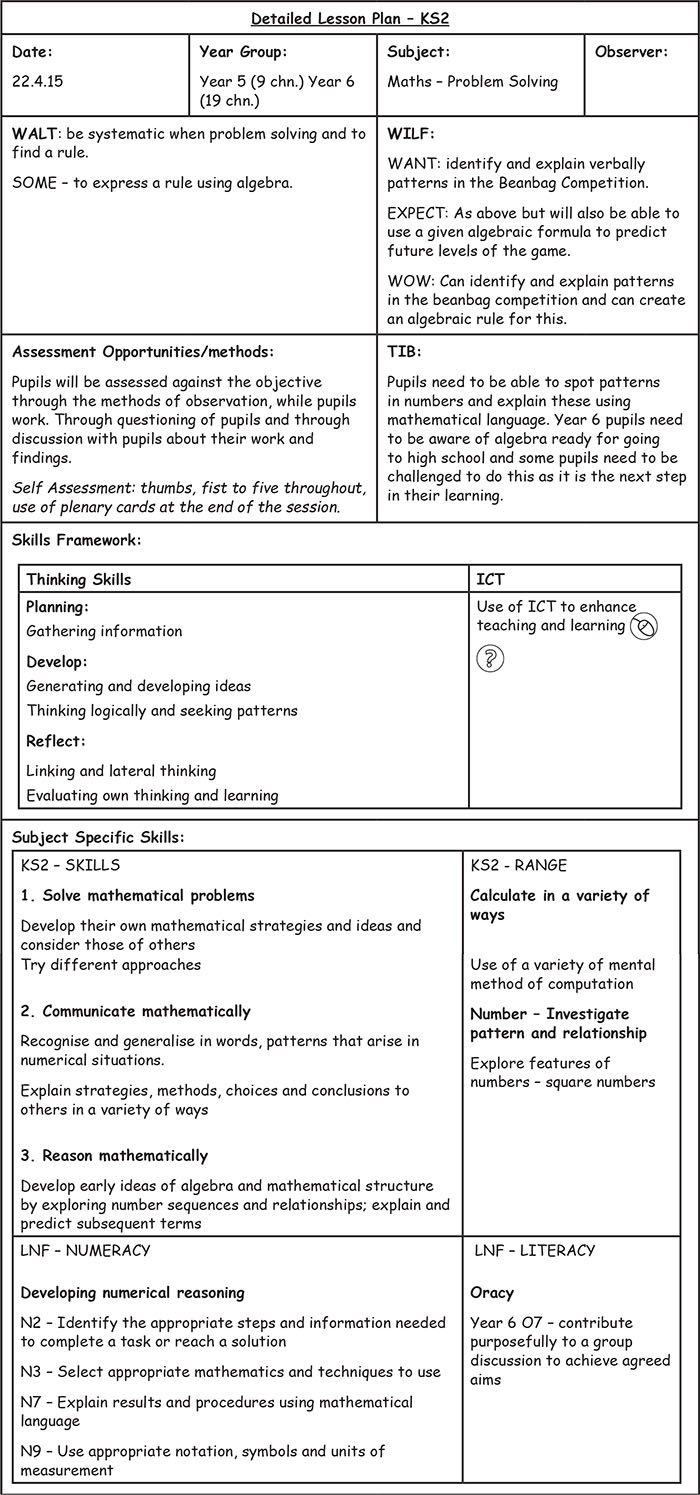
Previous Learning: Pupils have had some experience of identifying rules within problem solving sessions but further consolidation and work is needed on this in order to ensure that MAT pupils in particular demonstrate this level 5 skill. | Resources: Mini whiteboards Interactive board Squared paper Beanbags and chalk Count Fourways PPT – Step 5 in 2s Jigsaw Numbers PPT – Step 5 Plenary Cards |
Key Vocabulary: CLIC – proper, improper and mixed number fractions, jigsaw numbers Algebra Pattern Rule Horizontally Vertically Square numbers | |
Key Questions: What is the shortest route I can take? What patterns do you notice in your results? How would you explain this pattern? Can you predict what will happen at level … of this competition? Why do you think that the shortest walk is one less than the number of beanbags? | |
Introduction: BLP: collaboration, revising, noticing Remind the children of what CLIC means CLIC – First 20 minutes Counting – Count Fourways Step 6 – for 2s – I can count in decimals. Use the PowerPoint to practise counting forward and backwards in decimals. Ask pupils about fraction equivalents. Learn its – Chant 8 times table. Randomised names to answer a jumbled times table question. It’s nothing new – Jigsaw Numbers Step 5 – I can find the missing decimal piece. Recap ‘remember to’s for this step (completed yesterday). Using PPT go over some of these together as a class, with pupils showing their answers on the mini whiteboards. Calculation Multiplication Step 17 – I can solve a 1d x a 1d.p. On mini whiteboards pupils practise multiplication strategies. Remind pupils to make links to Squiggleworth and the ‘remember to’s for this step. Differentiation for this is as follows: JP, SR, KL, MR, ZT – practise full written method for step 17 – with SH. Class and MAT – start to move pupils onto abridged part of step 17 – Teacher models how we can complete 4 x 2.3 using an abridged method. Pupils practise this on mini whiteboards and show me! • Introduce the objective to the children. Share the success criteria to the lesson with them and discuss the skills and learning muscles that we will be using. Go over the structure of the lesson with the pupils. • Explain to pupils that there is a new Olympic sport. What do you think it is? • Show pupils grid on IWB. Explain that this is level three of the competition. Explain that in order to win they need to pick up all the beanbags in the shortest time by only walking horizontally or vertically. Demonstrate a route on the board – what is wrong with this route? • Take children outside with a grid already set up. In pairs – can you work out a route? Snowball and share ideas with another pair. Get a child from each pair to show route. Which is the shortest? How did you know? How can we describe how far we have walked? Ensure pupils have found the shortest route. | |
Main Activity: BLP: collaboration, noticing, reasoning, perseverance • Group Task – draw grids for the next two levels of the competition – 4x4, 5x5 and 6x6 (time permitting). Work out the shortest possible route. Rough paper to record results – how can we record them systematically? Differentiation: LA pupils – Support by SH for this part of the activity. MAT – through questioning get pupils to start to think of the algebraic formula and make predictions – Can you tell me any patterns you see in your results? How could we record this pattern using algebra, e.g. if n is the number of sides? How would you explain it to someone else? Can you predict how many steps are needed for level 10? • Record pupils’ results on the board. Show pupils the results table so far. Can you predict what the number of steps will be for level 6 or 7? How did you work that out? • Paired TALK – what patterns or rules can you see? Why do you think that the shortest walk is one less than the number of beanbags? Snowball discussion. Record pattern in words on the board. Explain that mathematicians hate writing and so like to shorten things down. • If MAT were able to do this during the group activity ask some of them to explain the rule to the children using some algebra. This can be reinforced with the use IWB, to explore how we could represent this as an algebraic rule. Check pupils can remember their square numbers. • Using mini whiteboards get pupils to confirm this rule by using the example of 7 sides. LA pupils are supported throughout this part of the lesson by SH. MAT pupils could use the formula to calculate the number of steps for the 20th, 43rd and 113th levels. • Throughout the session reinforce the learning objective and the success criteria – use of thumbs and fist to five to do so. | |
Plenary: BLP: meta learning • Go over the learning objective with the children and get an initial thumbs for the LO. • Pupils chose the plenary for the session using the plenary cards – random plenary selected and completed by the children! Ensure that plenary enables pupils to reflect on the LO and the success criteria as well as skills used in the session and the BLP muscles used. • Go away and have a think – housepoint for those that come back with an answer! - Would our results be the same if we did a rectangle format instead of a square? Why? Can you think of any real-life examples of this? | |
Teacher/SLSO Evaluation: | |
Source: St Roberts RC Primary School
- Loading...
Get a 30 day FREE TRIAL
-
 Watch videos from a variety of sources bringing classroom topics to life
 -
Read modern, diverse business cases
-
Explore hundreds of books and reference titles
Read next

More like this
Sage Recommends
We found other relevant content for you on other Sage platforms.
Have you created a personal profile? Login or create a profile so that you can save clips, playlists and searches