
Summary
Contents
Subject index
The recent widespread rejection of conventional theory and method has led to the evolution of different ways of gathering and analyzing data. This accessible textbook introduces key research methods that challenge psychology's traditional preoccupation with `scientific' experiments. The book provides a well-structured guide to methods, containing a range of qualitative approaches (for example, semi-structured interviews, grounded theory, discourse analysis) alongside a reworking of quantitative methods to suit contemporary psychological research. A number of chapters are also explicitly concerned with research as a dynamic interactive process. The internationally respected contributors steer the reader through the main stag
Basic Principles of Transcription
Basic Principles of Transcription
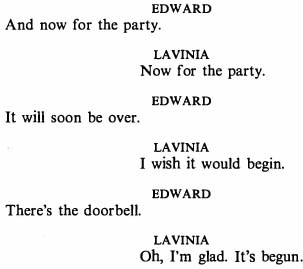
To begin with a citation such as this is not quite fair! Anyone who does not recognize it as the end of T.S. Eliot's The Cocktail Party (1958: 186), followed immediately by ‘curtain’ in the published text, is considerably disadvantaged. Let us assume for the present purposes that it is also a record of something other than just the last page of a book – that it is also a transcript of a performance from the first production at the Edinburgh Festival, 22–7 August 1949, and has been produced from a filmed performance.
This is admittedly a fiction. Originally, Eliot did not transcribe this play, he composed it. Composition is the basic determination of the words, written sequences and structures considered necessary for this work to be The Cocktail Party; but one does not transcribe one's thoughts into writing, except in some figurative sense. Without a performance, adhering to the prescribed words of a composition, there can be no transcript thereof; and there are as many different transcripts possible as there are different performances of the same composition. And as we shall see, there are as many possible transcripts of the same performance just as there are various purposes for transcribing.
What we will be discussing in the following is largely a matter of everybody's purposes in doing and saying certain things and in the transcribing thereof. Thus arises our very first question regarding transcription: sampling. To be concrete about it, why would anyone want to transcribe just this fragment of dialogue? Without knowing about British playwrights in mid-century, about Eliot himself, about the rest of the play, about the styles of Ursula Jeans (Lavinia) and Robert Flemyng (Edward), about the setting of the Edinburgh Festival, without having been there, and without having seen the film produced from the performance, one is really at a loss as to why this fragment has been sampled.
Well, we sampled it, and our purpose in doing so is to have it stand here for the duration of this piece to be queried about the various purposes we spoke of above and about how to accomplish them in the processes of transcribing.
But to return to this first question of sampling, it is hard to imagine some other legitimate purpose in sampling just this much of The Cocktail Party unless perhaps at the end of a composition that would give it a context and provide a purpose for sampling precisely this fragment.
In point of fact, much of what we deal with in transcribing spoken discourse is in one sense or another fragmentary. It is, in fact, literally the case that the only way to know what really went on in a conversation is to have been there. And even then, the appreciations and corresponding reports of participants A, B and C, and of the neutral bystander-observer, will be divergent. This divergence is not just noise; it is part and parcel of the richness and beauty of intentions and understandings in human discourse: they do indeed transcend any record that can be made of them.
...
- Loading...
Get a 30 day FREE TRIAL
-
 Watch videos from a variety of sources bringing classroom topics to life
 -
Read modern, diverse business cases
-
Explore hundreds of books and reference titles

Read next

More like this
Sage Recommends
We found other relevant content for you on other Sage platforms.
Have you created a personal profile? Login or create a profile so that you can save clips, playlists and searches