
Entry
Reader's guide
Entries A-Z
Subject index
Air Travel
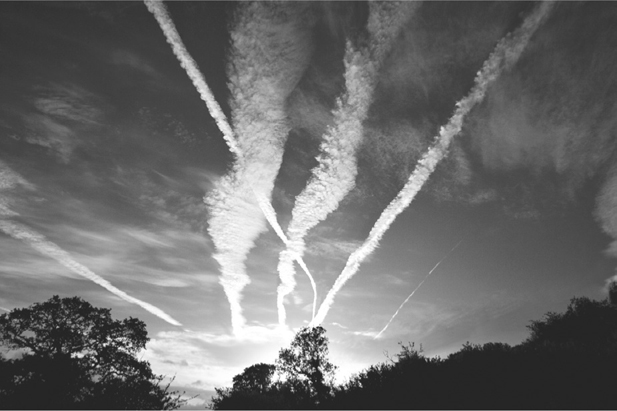
The idea of green air travel at first seems impossible. Though air travel in 2009 accounted for about 2–3 percent of anthropogenic carbon dioxide emissions, some estimates have annual aircraft emissions tripling by 2050, the same time period during which many efforts are scheduled to reduce emissions from all other sources. Air travel not only consumes vast amounts of nonrenewable fossil fuels but is also a major contributor to nitrogen oxide in the troposphere. The cumulative effect is such that the per passenger, per mile effect of air travel is nearly as great as that of each passenger driving the same distance himself and is significantly worse than that of small or hybrid cars, or ground mass transit (whether rail or bus). Aircraft contrails, high-altitude vapor trails formed when atmospheric water vapor condenses around particles of engine exhaust, has a noticeable effect on climate as well—great enough that the three-day grounding of U.S. air traffic after September 11, 2001, had a measurable effect on atmospheric temperatures (1 degree Celsius). Furthermore, a significant amount of air travel is travel that would not otherwise occur—few of the tourists taking three-day vacations to the other side of the country or visiting the other side of the world would make such trips if they were limited to other modes of transport. Much of this polluting transit, in other words, is dispensable in a sense that many other sources of pollution are not.
However, these factors also serve to motivate greener forms of air travel. Fuel efficiency is not only good for the environment, it is good for business, and offering a green passenger flight is a value-added incentive that may attract enough customers to offset the expense of the changes necessary to make that flight more energy-efficient or less environmentally damaging.
Aircraft contrails have such an impact on climate that the three-day grounding of U.S. air traffic after September 11, 2001, had a measurable effect (1 degree Celsius) on atmospheric temperatures
There are actions consumers can take, regardless of whether an airline offers greener service. Because takeoff and landing are the most fuel-using parts of a flight, and because indirect flights involve more total travel miles, a direct flight, though often more expensive, will consume considerably less fuel. Using an airplane bathroom consumes about as much gasoline as six miles of flight, so avoiding it helps reduce one's effect as well, as does packing less (or, less easy to adjust with short notice, weighing less). As with any activity involving greenhouse gas emissions, there is an option to purchase carbon offsets to balance out one's effect.
However, the real potential lies in “greening” air travel itself, at the airline and manufacturer level rather than through passengers' activities. In April 2008, Boeing tested the first manned plane powered only by fuel cells, using hydrogen, converted through chemical reaction into electricity and water. There is no combustion engine, no carbon emissions, so although water vapor is not a benign substance at high altitudes, the assumption (or hope) is that water vapor emissions would be significantly less harmful than carbon. The test plane was too small for more than two people, but the Wright brothers started with a small craft too. In theory, such planes can someday be built on the same scale as today's commercial passenger planes.
...
- Green Consumer Challenges
- Affluenza
- Air Travel
- Carbon Emissions
- Commuting
- Conspicuous Consumption
- Disparities in Consumption
- Dumpster Diving
- Durability
- E-Waste
- Electricity Usage
- Energy Efficiency of Products and Appliances
- Food Additives
- Food Miles
- Genetically Modified Products
- Greenwashing
- Healthcare
- Insulation
- Lawns and Landscaping
- Materialism
- Needs and Wants
- Overconsumption
- Pesticides and Fertilizers
- Pets
- Pharmaceuticals
- Positional Goods
- Poverty
- Pricing
- Quality of Life
- Resource Consumption and Usage
- Solid and Human Waste
- Super-Rich
- Symbolic Consumption
- Waste Disposal
- Windows
- Beverages
- Bottled Beverages (Water)
- Coffee
- Confections
- Dairy Products
- Fish
- Meat
- Poultry and Eggs
- Slow Food
- Tea
- Vegetables and Fruits
- Water
- Green Consumer Products and Services
- Adhesives
- Apparel
- Audio Equipment
- Automobiles
- Baby Products
- Books
- Car Washing
- Certified Products (Fair Trade or Organic)
- Cleaning Products
- Computers and Printers
- Cosmetics
- Disposable Plates and Plastic Implements
- Floor and Wall Coverings
- Fuel
- Funerals
- Furniture
- Garden Tools and Appliances
- Grains
- Home Appliances
- Home Shopping and Catalogs
- Homewares
- Internet Purchasing
- Lighting
- Linen and Bedding
- Magazines
- Malls
- Mobile Phones
- Packaging and Product Containers
- Paper Products
- Personal Products
- Recyclable Products
- Seasonal Products
- Services
- Shopping
- Shopping Bags
- Sports
- Supermarkets
- Swimming Pools and Spas
- Television and DVD Equipment
- Tools
- Toys
- Green Consumer Solutions
- Biodegradable
- Carbon Credits
- Carbon Offsets
- Certification Process
- Composting
- Consumer Activism
- Downshifting
- Ecolabeling
- Ecological Footprint
- Ecotourism
- Environmentally Friendly
- Ethically Produced Products
- Fair Trade
- Gardening/Growing
- Gifting (Green Gifts)
- Green Communities
- Green Consumer
- Green Consumerism Organizations
- Green Design
- Green Discourse
- Green Food
- Green Gross Domestic Product
- Green Homes
- Green Marketing
- Green Politics
- Local Exchange Trading Schemes
- Locally Made
- Markets (Organic/Farmers)
- Morality (Consumer Ethics)
- Organic
- Plants
- Product Sharing
- Public Transportation
- Recycling
- Regulation
- Secondhand Consumption
- Simple Living
- Sustainable Consumption
- Vege-Box Schemes
- Green Consumerism Organizations, Movements, and Planning
- Advertising
- Commodity Fetishism
- Consumer Behavior
- Consumer Boycotts
- Consumer Culture
- Consumer Ethics
- Consumer Society
- Consumerism
- Demographics
- Diderot Effect
- Environmentalism
- Fashion
- Final Consumption
- Finance and Economics
- Frugality
- Government Policy and Practice (Local and National)
- Heating and Cooling
- International Regulatory Frameworks
- Kyoto Protocol
- Leisure and Recreation
- Lifestyle, Rural
- Lifestyle, Suburban
- Lifestyle, Sustainable
- Lifestyle, Urban
- Organisation for Economic Co-operation and Development (OECD)
- Production and Commodity Chains
- Psychographics
- Social Identity
- Taxation
- United Nations Human Development Report 1998
- Websites and Blogs
- Loading...
Get a 30 day FREE TRIAL
-
 Watch videos from a variety of sources bringing classroom topics to life
 -
Read modern, diverse business cases
-
Explore hundreds of books and reference titles

Read next

More like this
Sage Recommends
We found other relevant content for you on other Sage platforms.
Have you created a personal profile? Login or create a profile so that you can save clips, playlists and searches