
Entry
Reader's guide
Entries A-Z
Subject index
Body Shop, the
Employing about 10,000 people in some 2,500 stores in over 60 countries, and selling well over 1,200 different beauty products around the globe, The Body Shop International is the second largest cosmetics franchise in the world. Founded by Anita Roddick in 1976, the company's corporate vision was greatly influenced by its founder, who wrote in her book Body and Soul, “There is no power on earth apart from business capable of making the changes we desperately need for the continued survival of the planet.” Since its inception, the company has pushed hard to become known as a “green company,” avoiding animal testing, seeking fair trade practices, cutting carbon emissions, using only recycled packaging materials, among many initiatives geared toward a sustainable business model. After spectacular growth during its first decade and a half, The Body Shop went through several ups and downs in its attempts to expand its business model to countries like the United States and Germany, and experienced growth rates that were significantly below expectations.
Serious losses forced the company, in the late 1990s, to give up on production of cosmetics, and instead concentrated merely on sales. Shortly before the death of the founder, but following a renewed period of growth, the company was sold in 2006 to the L'Oréal Group. In order to retain its value-based identity, it continues to be headquartered in the United Kingdom and operates independently within the L'Oréal Group.
The company seeks to be a leader not only in promoting greater corporate transparency, but also in representing a force for positive social and environmental change. As such, the company pursues campaigns around the world that are ground in five core values:
- Opposing animal testing
- Supporting community fair trade
- Defending human rights
- Activating self-esteem
- Protecting the planet
The Body Shop's key distinctive proposition is that it is against animal testing—every product is vegetarian and animal-cruelty free. It was the first cosmetics brand to be recognized under the Human Cosmetics Standard against Animal Testing Policy. The company also believes in fair trade policies—in the 1990s, it set up a fair trade program called “Community Trade” that works with 30 suppliers in more than 20 countries, providing over 25,000 people around the globe with essential incomes to sustain themselves. A charitable wing, The Body Shop Foundation, was started in 1990 to aid pioneering front line organizations that otherwise could not find funding. In 1997, the company's founder launched a global campaign to raise self-esteem in women and against the media stereotyping of women, with a particular focus on the socially pathological emphasis on skinny models, leading to massive increases in bulimia and anorexia victims. It has also focused on human and civil rights issues and environmental and animal protection.
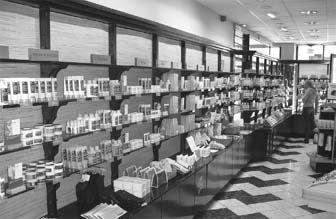
The Body Shop is a proponent of greater corporate transparency and positive social and environmental change. Here, a Body Shop store in Oslo, Norway
Historical Milestones
The history of The Body Shop is the rather unlikely story of a mom-and-pop-sized store, started in Brighton on the south coast of England in 1976, with quaint ideas about socially and environmentally responsible business practices having the potential to change the world. Within less than two decades, it grew into a multinational corporation spanning the globe. And while there is ongoing debate about how true The Body Shop remained to its founding ideals, or whether the underlying motivation was not always essentially the same as in traditional businesses, namely to make money, there is no question that The Body Shop managed to create a fundamentally different business model with greater concern for the well-being of its suppliers, consumers, employees, as well as for the environment. Indeed, the corporate history of the The Body Shop is organically inseparable from its many social and environmental initiatives.
...
- Business Organizations, Movements, and Planning
- Balanced Scorecard
- Best Available Control Technology
- Best Management Practices
- Ceres Principles
- Certification
- Closed-Loop Supply Chain
- Compliance
- Core Competencies
- Corporate Social Responsibility
- Cost-Benefit Analysis
- Demand-Side Management
- Discounting
- Dow Jones Sustainability Index
- Ecoeffectiveness
- Ecoefficiency
- Ecoindustrial Park
- Ecological Economics
- Economic Value Added
- Emissions Trading
- Energy Performance Contracting
- Energy Service Company
- Environmental Accounting
- Environmental Assessment
- Environmental Audit
- Environmental Economics
- Environmental Impact Statement
- Environmental Indicators
- Environmental Management System
- Environmental Marketing
- Environmental Risk Assessment
- Environmental Services
- Environmentally Preferable Purchasing
- Equator Principles
- Extended Producer Responsibility
- Extended Product Responsibility
- Externalities
- Factor Four and Factor Ten
- Fair Trade
- Genuine Progress Indicator
- Global Reporting Initiative
- Global Sullivan Principles
- Industrial Ecology
- Industrial Metabolism
- Industrial Nutrients
- Informational Regulation
- Integrated Bottom Line
- International Organization for Standardization
- ISO 14000
- ISO 19011
- Leadership in Green Business
- Life Cycle Analysis
- Material Input per Service Unit (MIPS)
- Maximum Achievable Control Technology
- National Priorities List
- Natural Capital
- New Source Review
- Quantitative Risk Assessment
- Recycling, Business of
- Reverse Logistics
- Service Design
- Social Return on Investment
- Steady State Economy
- Stewardship
- Supply Chain Management
- Value Chain
- Business Profiles
- Green Business Challenges
- Green Business Solutions
- Abatement
- Appropriate Technology
- Bio-Based Material
- Biofuels
- Biological Resource Management
- Biomimicry
- Bioremediation
- Biotechnology
- Blended Value
- Brownfield Redevelopment
- Carbon Neutral
- Carbon Sequestration
- Carbon Trading
- Cause-Related Marketing
- Clean Fuels
- Clean Production
- Clean Technology
- Cogeneration
- Conservation
- Coopetition
- Cradle-to-Cradle
- Deposit Systems
- Distributed Energy
- Ecolabels
- Ecosystem Services
- Ecotourism
- Environmental Justice
- Green Building
- Green Chemistry
- Green Design
- Green Retailing
- Green Technology
- Green-Collar Jobs
- Gross National Happiness
- Integrated Pest Management
- Organic
- Pollution Offsets
- Pollution Prevention
- Precautionary Principle
- Remanufacturing
- Resource Management
- Responsible Sourcing
- Restoration
- Right to Know
- Seventh Generation
- Six Sigma
- Smart Energy
- Social Entrepreneurship
- Social Marketing
- Socially Responsible Investing
- Superfund
- Sustainability
- Sustainable Design
- Sustainable Development
- Systems Thinking
- Take Back
- Upcycle
- Voluntary Standards
- Waste Reduction
- Loading...
Get a 30 day FREE TRIAL
-
 Watch videos from a variety of sources bringing classroom topics to life
 -
Read modern, diverse business cases
-
Explore hundreds of books and reference titles

Read next

More like this
Sage Recommends
We found other relevant content for you on other Sage platforms.
Have you created a personal profile? Login or create a profile so that you can save clips, playlists and searches